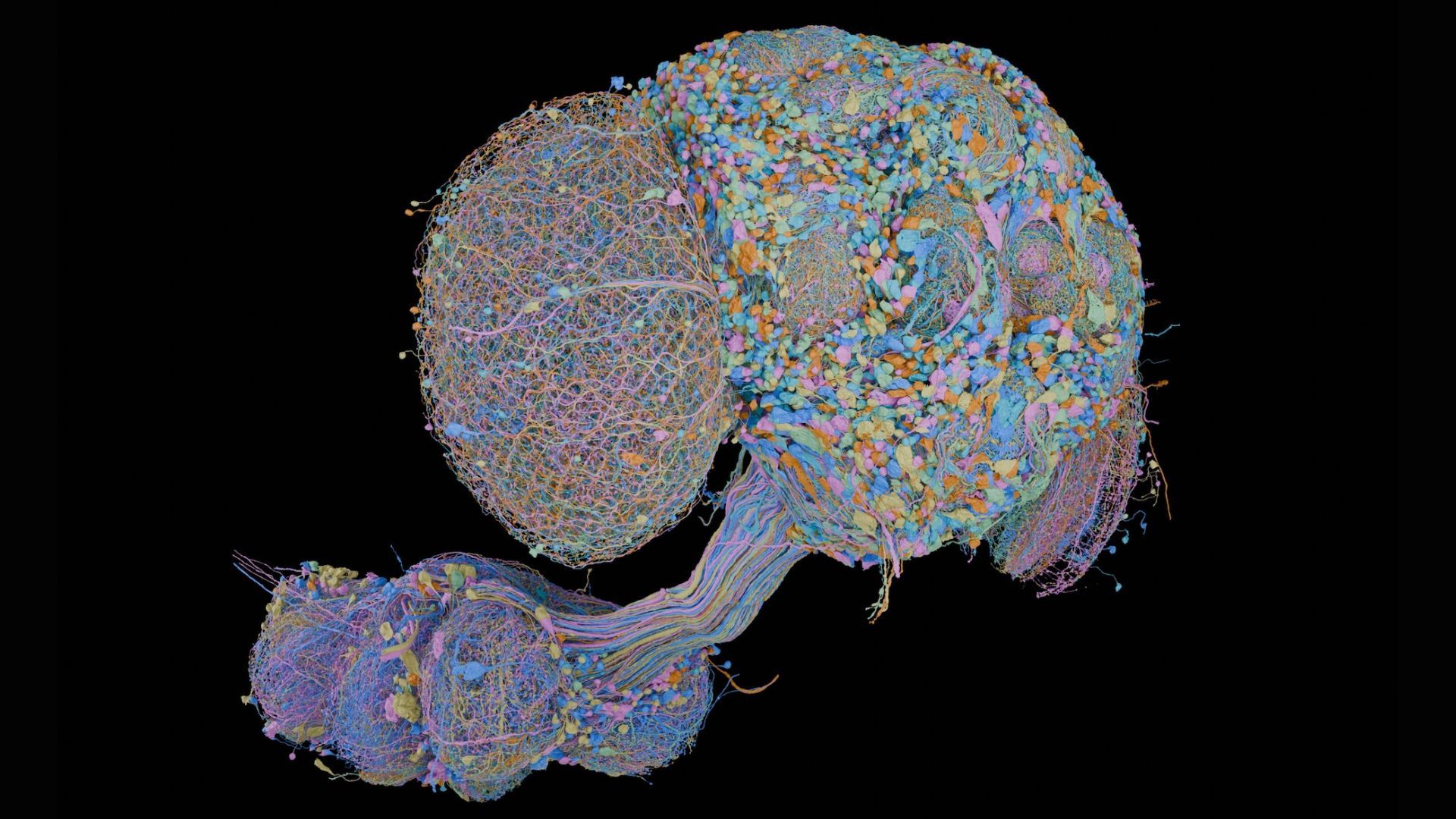
Researchers have completed a comprehensive map of the male fruit fly’s central nervous system, charting over 166,000 individual neurons including those in the brain and ventral nerve cord. This detailed wiring diagram, known as a connectome, now allows scientists to directly compare the male fly brain with a previously mapped female fly brain containing approximately 140,000 neurons.
The dual connectomes enable researchers to identify neural differences between sexes that may explain behavioral variations, particularly in mating rituals and aggressive responses. According to Gerry Rubin of the Howard Hughes Medical Institute’s Janelia Research Campus, this represents the first opportunity to compare male and female brains of an animal with complex social behaviors, potentially revealing which specific neurons drive sex-specific actions.
Published in Cell and Current Biology alongside three companion studies, the male connectome reveals that while some neural networks are sex-specific, circuits governing sensation and movement are largely shared between males and females. One accompanying study mapped taste-processing circuits, another examined vision pathways involving over half of the brain’s neuron types, and a third identified male-specific neural networks coordinating courtship and aggression patterns.
Scientists view this work as a technical blueprint for future connectome projects involving more complex organisms like mice and humans, ultimately aiming to understand how brain architecture enables sophisticated behaviors and informs treatments for neurological and psychiatric disorders.
Originally reported by Livescience →
About the Author