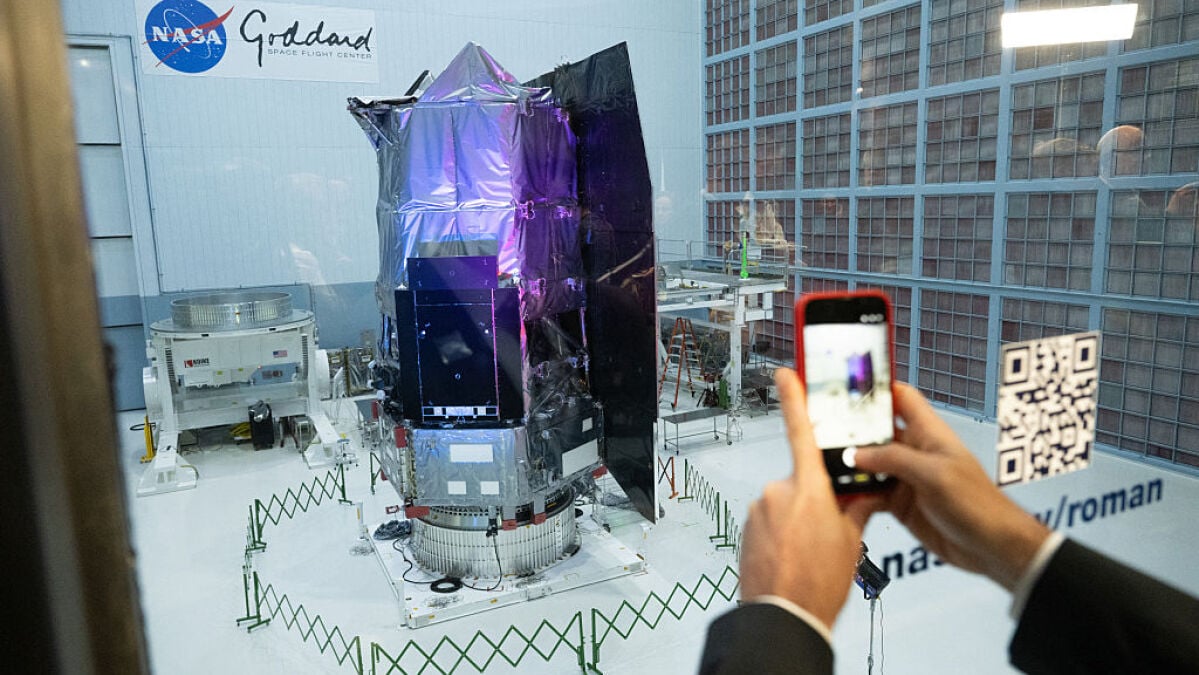
NASA’s Nancy Grace Roman Space Telescope, scheduled to launch as early as August 30, represents a significant addition to the agency’s observational capabilities. Unlike its predecessors, Roman is designed to survey vast sections of the cosmos rather than focus on individual deep-space observations, filling a critical gap in astronomical research.
The key distinction between Roman and existing telescopes like Hubble and Webb lies in its approach. While Hubble examines small patches of sky with great detail and Webb conducts infrared observations of distant objects, Roman will photograph areas at least 100 times larger while maintaining Hubble-quality infrared resolution. Over its first five years alone, Roman is expected to image more than 50 times the amount of sky that Hubble has captured in three decades. This expansive view will enable astronomers to identify rare cosmic phenomena that might otherwise go undetected, then direct Webb and Hubble toward detailed follow-up studies.
Roman will tackle fundamental cosmological questions by mapping galaxies and clusters across space and time, testing theories about the universe’s origins and composition, including dark matter and dark energy. The telescope’s advanced coronagraph instrument will also demonstrate the ability to directly image planets orbiting distant stars with unprecedented sensitivity, potentially paving the way for future missions designed to detect biosignatures on Earth-like worlds.
Originally reported by Mashable →
About the Author