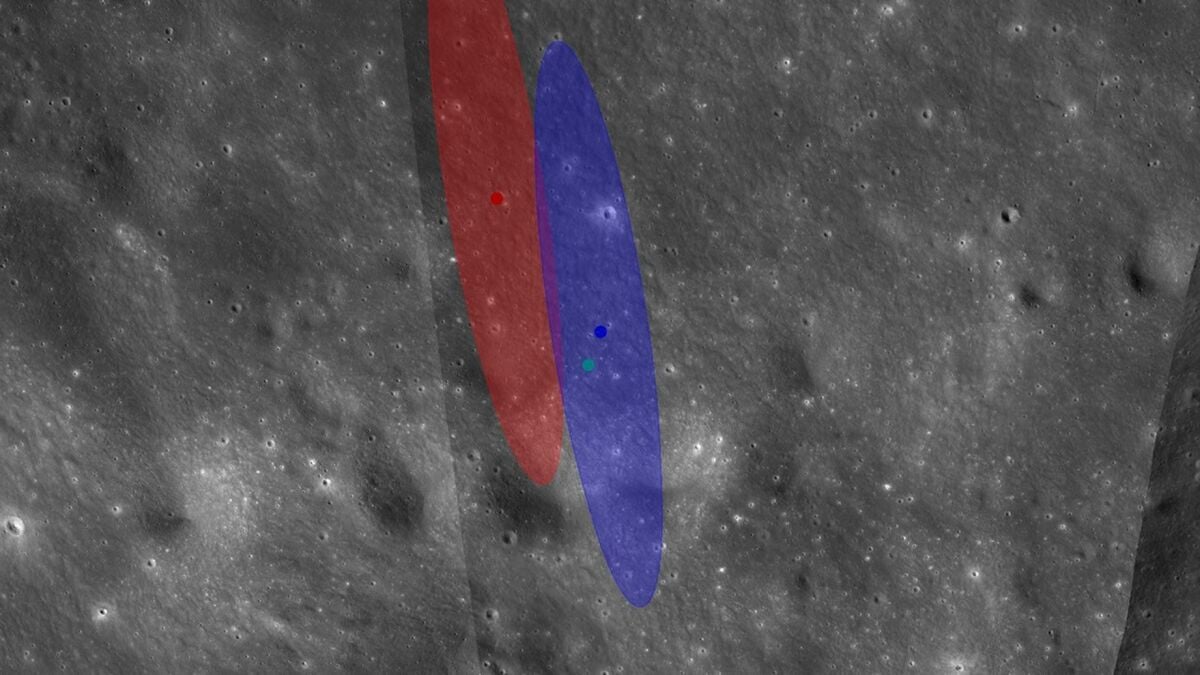
A SpaceX Falcon 9 rocket that collided with the moon approximately two weeks ago has created a notable impact crater, according to findings from NASA’s Lunar Reconnaissance Orbiter. The newly formed depression spans roughly 60 feet across—comparable to the width of an NBA basketball court—and reaches depths of up to 10 feet below the lunar surface. Scientists required six days to obtain imagery of the August 5 impact site near Einstein Crater, located near the boundary between the moon’s near and far sides, as the spacecraft awaited the proper orbital positioning to photograph the location.
The imaging process presented significant technical challenges for NASA’s team. Operating at approximately one mile per second, the orbiter’s camera required precise timing to capture the target zone. A timing error of just 10 seconds could have shifted the target location by 10 miles, rendering the images useless. The resulting photographs reveal distinct crater features, including a mix of darker, weathered material from near the surface and brighter, fresher lunar material excavated from deeper underground, providing valuable insights into the moon’s subsurface composition.
The approximately four-ton upper stage had wandered through space for over a year following its January 2025 launch from Cape Canaveral. Originally intended to remain in orbit after deploying two commercial lunar landers, gravitational forces and solar activity gradually altered its trajectory toward an unintended collision. NASA officials view the incident as an opportunity to refine their capacity to track and predict fast-moving lunar impacts, potentially enhancing safety protocols for future crewed missions.
Originally reported by Mashable →
About the Author