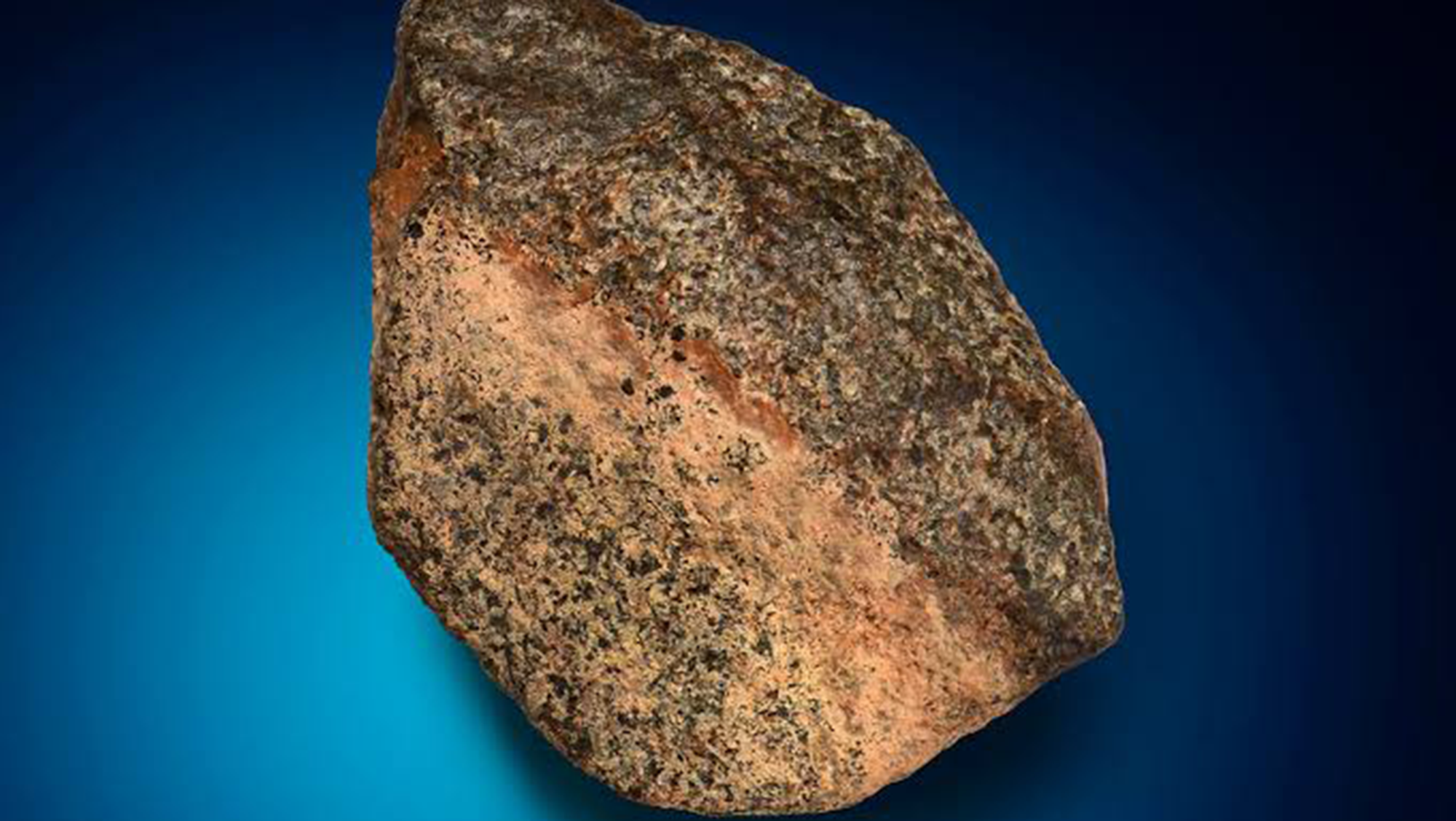
Scientists have identified what may be the oldest known piece of Mars ever found on Earth. The meteorite, called Teghaza 001, was discovered in Mali in 2022 and weighs approximately 28 ounces. Researchers analyzing radioactive decay rates in minerals within the space rock determined it is at least 4.1 billion years old, making it potentially the oldest-known Martian material ever recovered.
The composition of Teghaza 001 reveals surprising insights into Mars’ early geological history. The rock is rich in silica, suggesting that ancient Mars may have undergone granite-forming processes similar to those associated with plate tectonics on Earth. Recent studies using seismic data indicate that Mars once contained vast underground magma networks spanning thousands of miles, suggesting the planet may have generated complex crustal processes without requiring plate tectonics like those found on our world.
However, the meteorite also tells a cautionary tale about Mars’ habitability. Chemical analysis comparing Teghaza 001 with younger Martian meteorites reveals that the Red Planet lost significant amounts of hydrogen—a key component of water—to space within several hundred million years after its magma ocean cooled. This indicates Mars was already losing its atmosphere and water rapidly by 4.1 billion years ago, fundamentally altering its potential to support life.
Researchers emphasize that more samples are needed to fully understand Mars’ ancient history, cautioning that current conclusions rest on evidence from a single, rare specimen.
Originally reported by Livescience →
About the Author