Kids Have Been Drawing Violent Battles And Fantastical Beasts on Their Homework Since The 13th Century
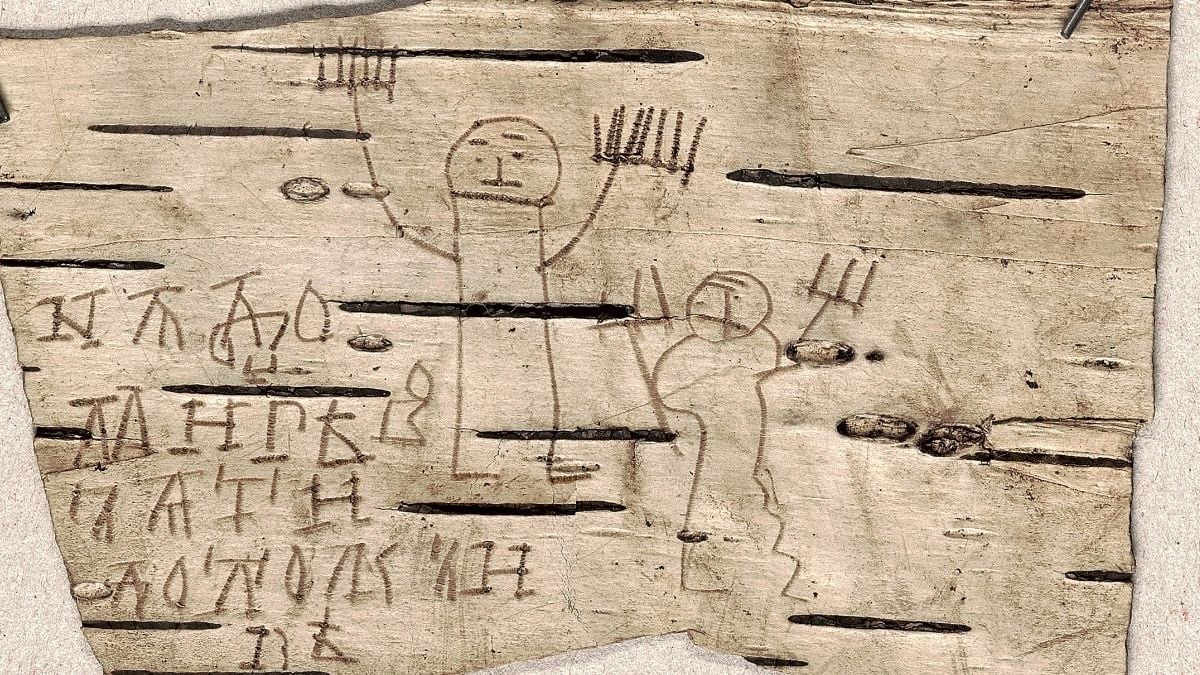 Long before the 'cool S', Onfim was doodling wars, beasts, and friendship on his homework.
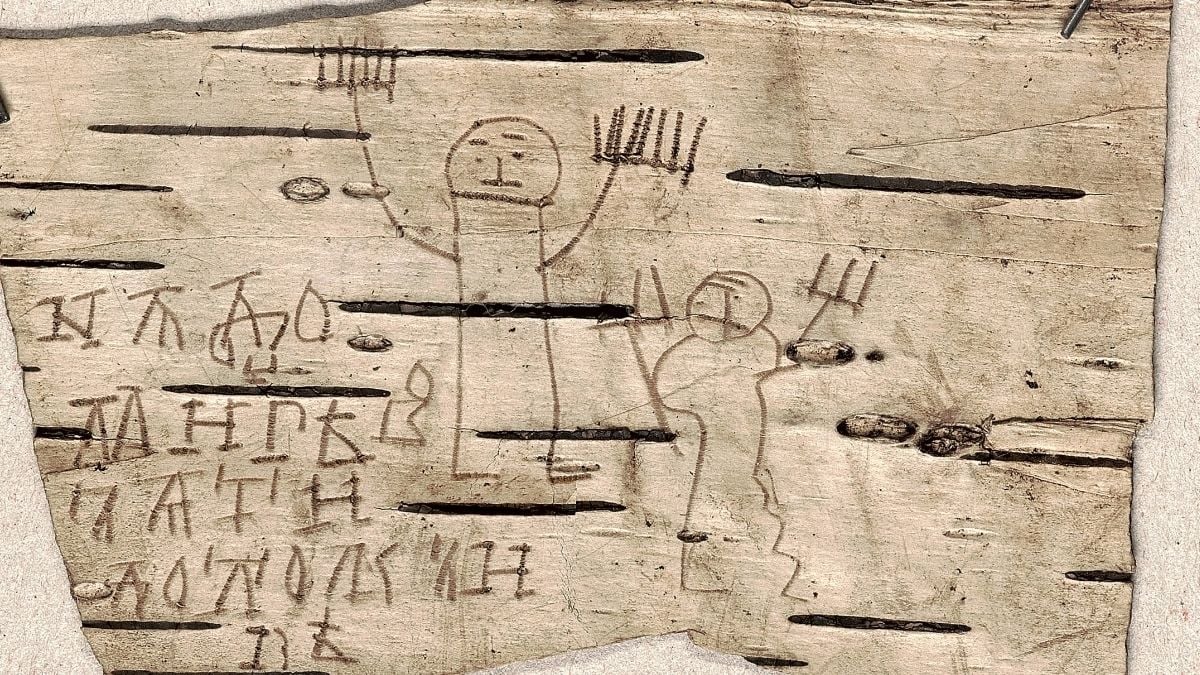
The impulse to sketch imaginative scenes on schoolwork is far from a modern phenomenon. A young student named Onfim, who lived in the medieval Novgorod Republic during the 13th century, left behind a collection of doodles on birch bark that reveal this timeless behavior. At approximately six or seven years old, Onfim filled the margins of his writing practice with elaborate illustrations, from stick figures and fantastical creatures to intense battle scenes featuring soldiers, horses, and flying arrows.
Onfim’s artistic legacy offers a window into medieval childhood and regional literacy practices. The Novgorod Republic had unusually high rates of literacy for its time, partly because birch bark provided an affordable and accessible writing surface compared to paper or parchment used elsewhere. Since the 1950s, archaeologists have uncovered over 1,100 pieces of inscribed birch bark from the region, spanning several centuries, but Onfim’s imaginative doodles stand out as particularly compelling historical artifacts.
Researchers have explored various explanations for why children compulsively doodle while studying. Some evidence suggests that drawing may help regulate emotions or improve memory retention, though contradictory findings indicate these benefits may be limited. Neuroscientists propose that the act of drawing strengthens fine motor skills and facilitates sensory integration, with each mark serving as a learning opportunity that helps children understand how their movements translate into visual patterns.
Whether motivated by procrastination, emotional regulation, or cognitive development, the practice appears deeply rooted in human nature, spanning centuries and cultures.
Originally reported by Sciencealert →
About the Author