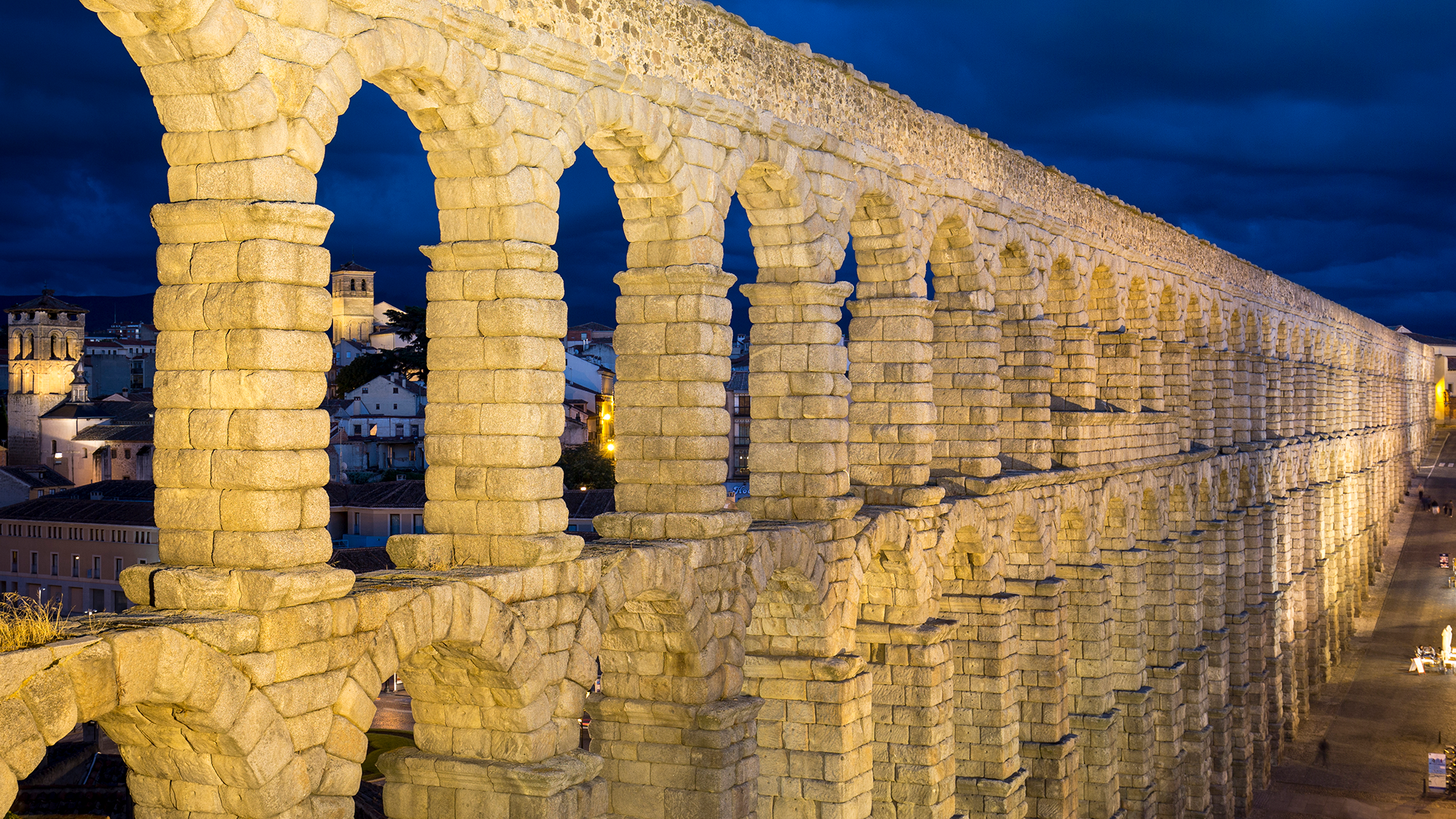
The ancient Romans constructed impressive aqueducts that transported water across vast distances to supply their cities and settlements. One notable example, the aqueduct of Valens serving Constantinople, modern-day Istanbul, stretched approximately 250 miles. These structures have endured for millennia, with many remains still visible today, showcasing remarkable Roman engineering capabilities.
Roman engineers employed sophisticated surveying techniques to plan aqueduct routes with precise gradients that allowed water to flow naturally toward their destinations. Surveyors utilized instruments such as the dioptra, a disc-shaped device with a sighting bar for measuring elevation differences, and the libra, which employed a suspended plumb bob for similar purposes. This careful planning ensured water would continuously move downhill from its source, typically a spring, to the target city.
The Romans’ use of specialized concrete contributed significantly to their aqueducts’ longevity. They mixed pozzolan, a volcanic ash substance, with lime and water to create durable concrete that hardened when exposed to moisture. Beyond materials, the Romans selected geologically stable routes and conducted regular maintenance throughout the aqueducts’ lifespans. Some structures featured underground sections in challenging terrain, while others utilized prominent arches. Before reaching cities, water passed through basins where sediment could settle. A project like Athens’ Hadrianic aqueduct, spanning roughly 12 miles, required approximately 500 workers over 15 years to complete.
Ongoing maintenance proved essential to aqueduct functionality. Workers periodically removed mineral buildup and replastered surfaces to preserve structural integrity. Small communities needed relatively few maintenance personnel, while Rome itself employed several hundred workers. Remarkably, some Roman aqueducts remain operational today, including the Aqua Virgo, constructed in 19 B.C., which continues supplying water to Rome.
Originally reported by Livescience →
About the Author