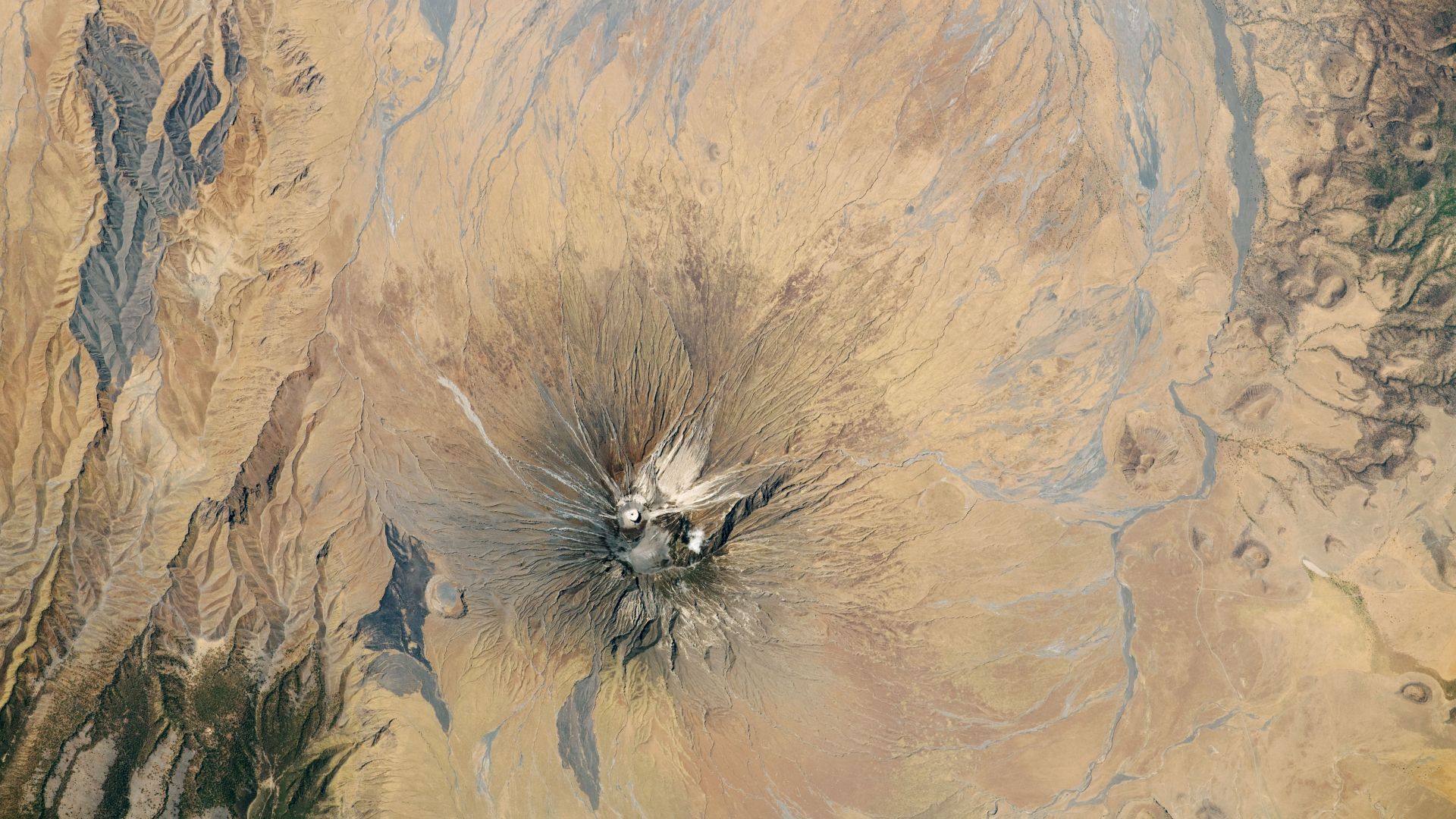
An International Space Station astronaut captured a striking image of Ol Doinyo Lengai in Tanzania on October 6, 2020, revealing the volcano crowned with fresh ash deposits. The peak, known locally as the “Mountain of God” by the Maasai people who believe it is the home of their supreme creator deity, rises 9,718 feet above the Arusha region’s grasslands in northern Tanzania.
This highly active African volcano produces an exceptionally rare form of lava composed of natrocarbonatite rock, distinguishing it from typical volcanic eruptions. The composition, rich in sodium, potassium and calcium carbonate but low in silica, results in molten material that remains cooler than standard lava, reaching temperatures below 1,100 degrees Fahrenheit. When this unusual lava solidifies through exposure to rainwater and atmospheric moisture, it develops a pale coloration and exhibits remarkable fluidity characteristics that make it among the fastest-flowing lava on Earth.
Ol Doinyo Lengai has demonstrated continuous volcanic activity for the past 15,000 years, alternating between gradual lava seepage and sudden explosive episodes. The volcano’s most recent extended eruption began in April 2017 and follows a series of major explosions occurring between 2007 and 2008 that created a 330-foot ash cone at the summit. Located within the East African Rift System, approximately 10 miles south of the distinctive red salt waters of Lake Natron, the volcano represents a significant geological feature shaped by the ongoing separation of African tectonic plates.
Originally reported by Livescience →
About the Author