“`html
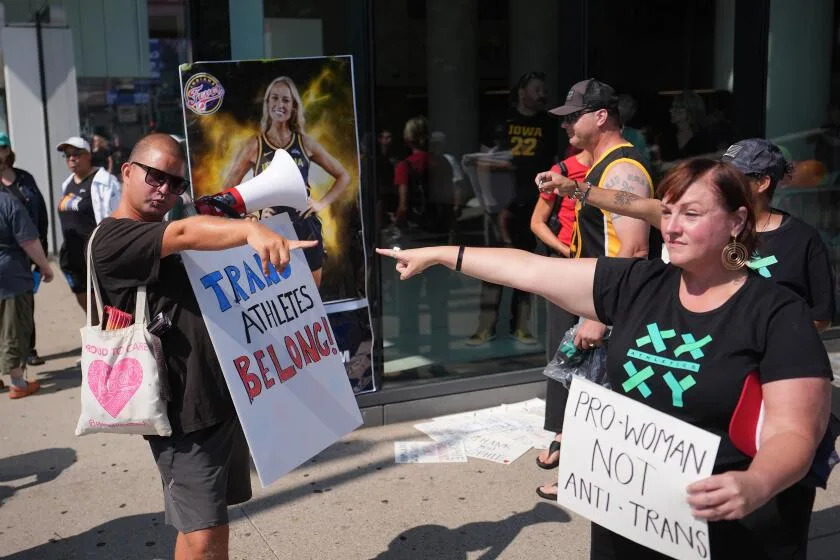
A debate over transgender athletes in professional women’s basketball has intensified following remarks by Indiana Fever guard Sophie Cunningham, who stated that biological men should not compete in women’s sports. Her comments, published in an ESPN profile last month, sparked protests outside WNBA games and drew attention from political figures and activists across the ideological spectrum. Cunningham has clarified that she holds no animosity toward the transgender community but emphasized her desire to protect young female athletes.
The controversy escalated when former NBA players Royce White and Enes Kanter Freedom declared themselves eligible for the 2027 WNBA draft, claiming transgender status. Critics characterized these actions as mocking attempts designed to ridicule the league’s inclusion policies. The WNBA responded by issuing a statement emphasizing that no transgender players are currently slated to join the league and denouncing what it called bad-faith efforts to create false narratives. The league’s collective bargaining agreement specifies that only women are eligible to play, though it does not explicitly define the term.
Despite the contentious nature of the debate, the controversy appears to have boosted viewership for the league. A recent Liberty-Fever matchup drew 2 million viewers on ESPN, marking the network’s second-most-watched regular season WNBA game in three decades. The heightened media attention surrounding the transgender athlete discussion has seemingly contributed to increased interest in women’s professional basketball, demonstrating how cultural disputes can paradoxically generate audience growth for the sport.
“`
Originally reported by Sports.yahoo →
About the Author