Astronomers Spotted a ‘Bear’ on Mars
 Oh my!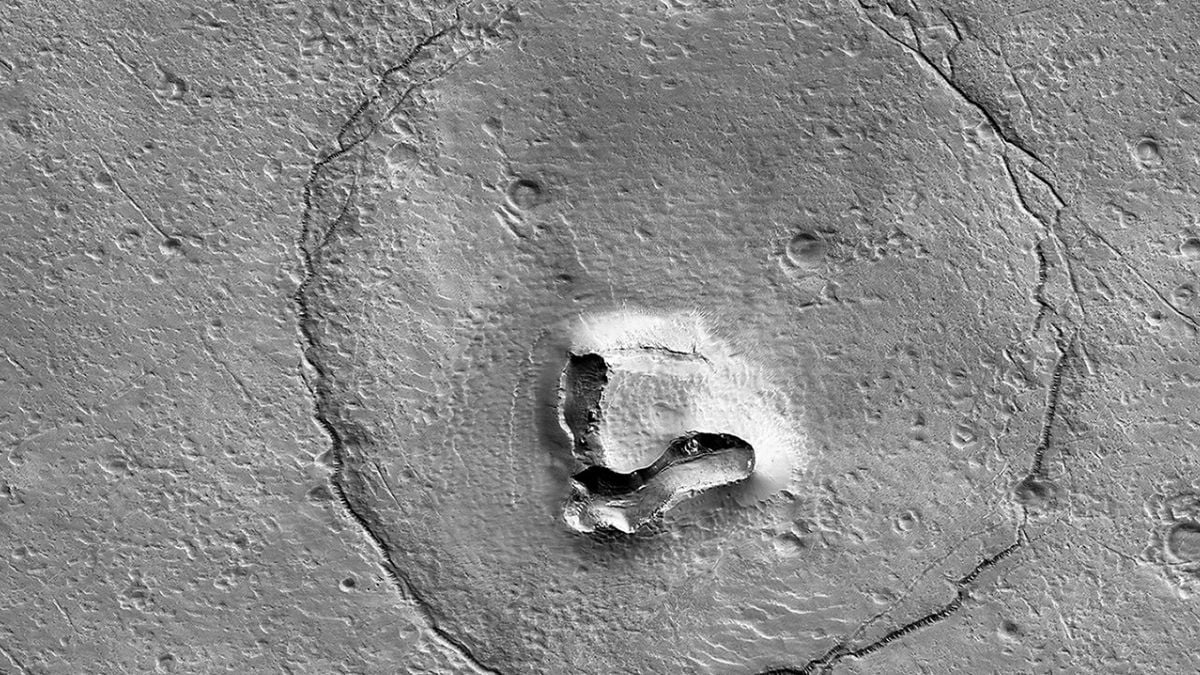
“`html
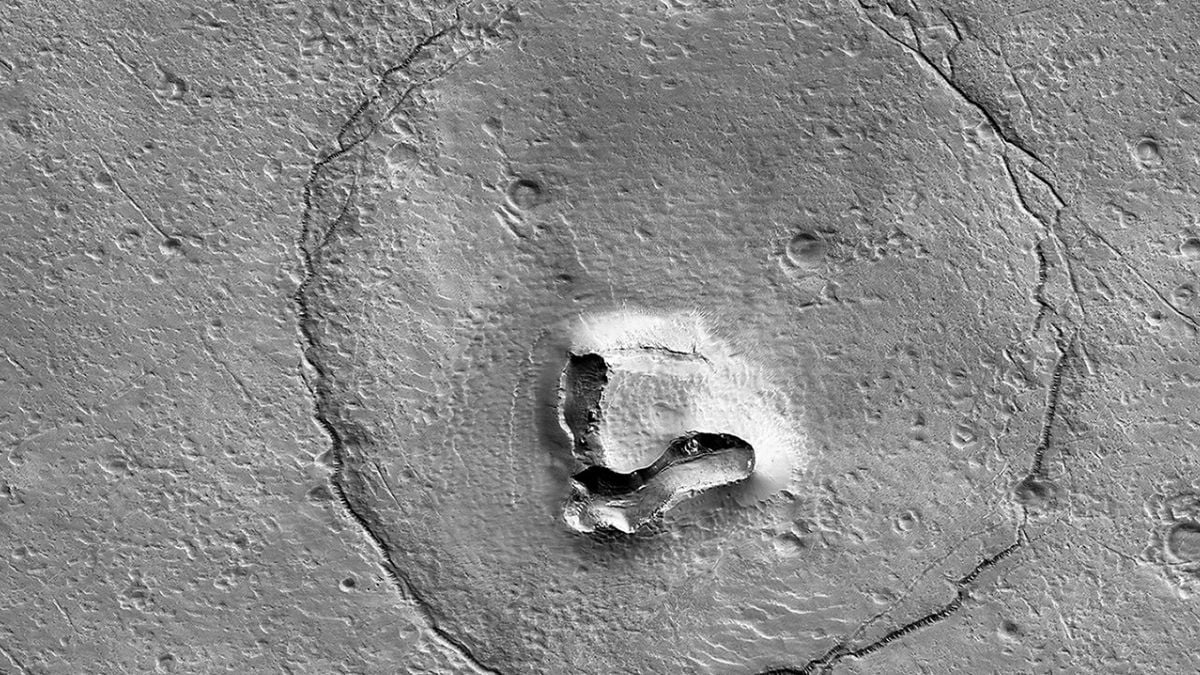
Researchers examining orbital images of Mars have identified a striking geological formation that bears an uncanny resemblance to a bear’s face. Captured by NASA’s Mars Reconnaissance Orbiter in December 2022, the Martian surface feature displays two dark circular depressions resembling eyes, a pale ridge tapering downward like a snout, and a circular crack pattern outlining the head. The discovery immediately captured public imagination, though scientists quickly identified a straightforward explanation for the remarkable likeness.
According to planetary scientist Alfred McEwen, who leads the HiRISE camera team, the formation comprises ordinary geological elements. The circular fracture likely represents material settling atop a buried and ancient impact crater. The V-shaped “nose” may be a volcanic or mud vent, with surrounding features marking where material once flowed from the opening. Each component has a conventional geological origin, yet together they create an unexpectedly recognizable appearance.
The phenomenon exemplifies pareidolia, a cognitive tendency where human brains recognize familiar patterns—especially faces—in random objects. This evolutionary adaptation allowed our ancestors to rapidly identify potential threats, but modern humans frequently find faces in everything from car headlights to cloud formations. Mars has produced similar visual curiosities before, including the famous “Face on Mars” photographed in 1976, which higher-resolution imaging later revealed as an unremarkable mesa. More recently, a smiley-faced salt deposit emerged in a region called Terra Sirenum, attracting scientific interest for its genuine significance regarding Mars’ geological history.
“`
Originally reported by Sciencealert →
About the Author