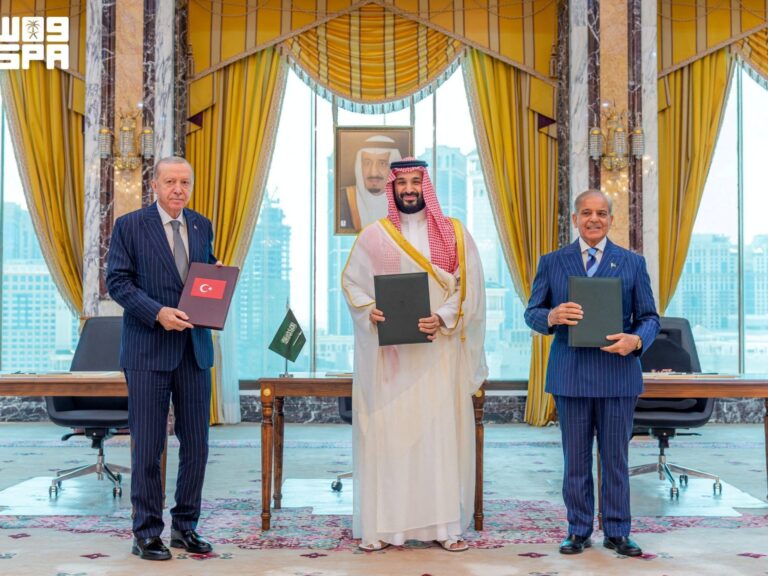
Leaders of Saudi Arabia, Turkey, and Pakistan have formally established the Mecca Joint Defence Agreement, creating a collective security arrangement whereby an armed attack against any member nation would be treated as an assault on all three. The alliance reflects these nations’ efforts to address escalating regional instability, including concerns about Israeli military expansion and Iranian activities throughout the region.
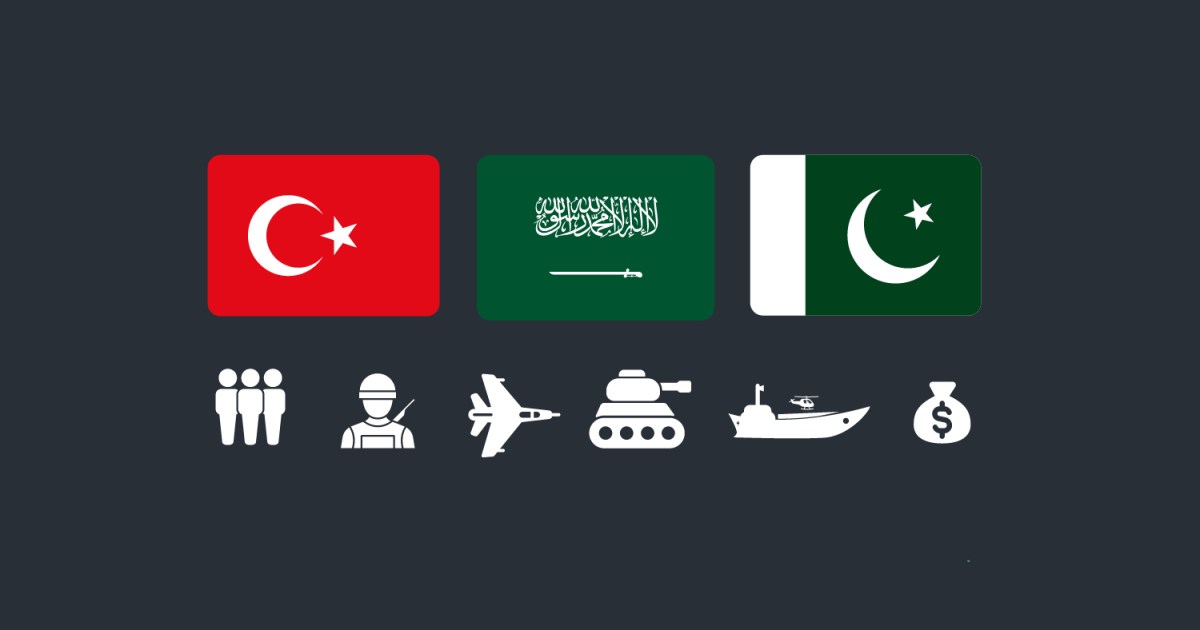
The partnership represents a substantial military consolidation, combining approximately 1.4 million active personnel, over 3,400 aircraft, and more than 340 naval vessels. Saudi Arabia’s significant financial resources and strategic geography complement Turkey’s advanced defense industrial capabilities and NATO-standard military systems, while Pakistan contributes the largest personnel base and serves as the sole nuclear-armed Muslim nation. Together, their annual defense spending totals roughly $124.4 billion, creating formidable combined land, air, and naval capabilities.
Each nation derives distinct strategic advantages from the pact. Saudi Arabia gains enhanced defense partnerships independent of traditional Western alignments, particularly regarding maritime security threats in critical waterways. Turkey strengthens its regional influence while Pakistan secures relationships with influential partners and potential new military suppliers, reducing reliance on individual nations for arms procurement and defense systems.
Originally reported by Aljazeera →
About the Author