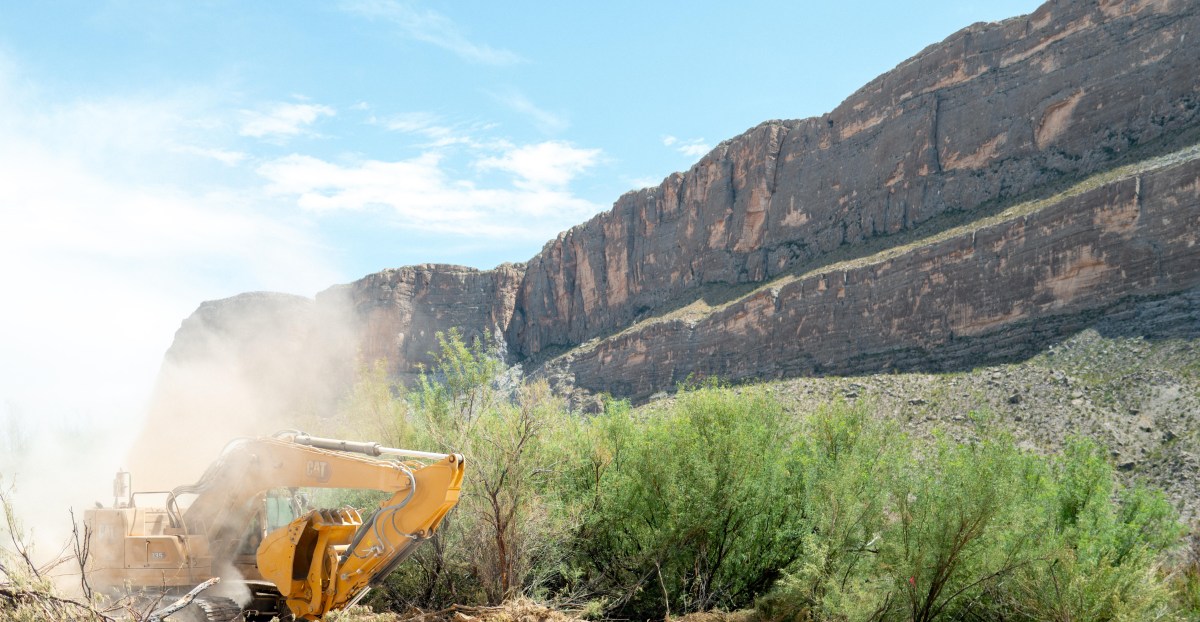
Construction crews have resumed work on an extension of the U.S.-Mexico border wall in Arizona, with recent activity focusing on areas near Patagonia. On July 27th, workers removed three cottonwood trees to make way for the project, including trees adjacent to a centuries-old specimen that locals refer to as the “grandmother” tree. The ancient cottonwood, estimated at over 200 years old, now displays visible signs of environmental stress, including premature leaf discoloration during summer months.
The renewed construction effort has generated significant environmental concerns and activism. An activist occupied the remaining cottonwood tree shortly after the initial clearing, establishing a presence that has continued since then. Conservation advocates argue the wall represents broader concerns about border militarization and its ecological impact, particularly in sensitive desert regions and protected lands.
The Department of Homeland Security has waived environmental regulations to expedite wall construction across remote sections of Texas, Arizona, and tribal reservation areas. This development has sparked opposition from residents in small communities including Ajo and Terlingua. Despite the resumed building efforts, southwestern border encounters have declined significantly since policy changes took effect, raising questions about the infrastructure project’s necessity.
The border security system now encompasses advanced surveillance technology including drones, monitoring towers, and camera networks operating alongside physical barriers. Critics question why extensive physical construction continues given existing technological surveillance capabilities and declining migrant crossings at the southwestern border.
Originally reported by Theverge →
About the Author