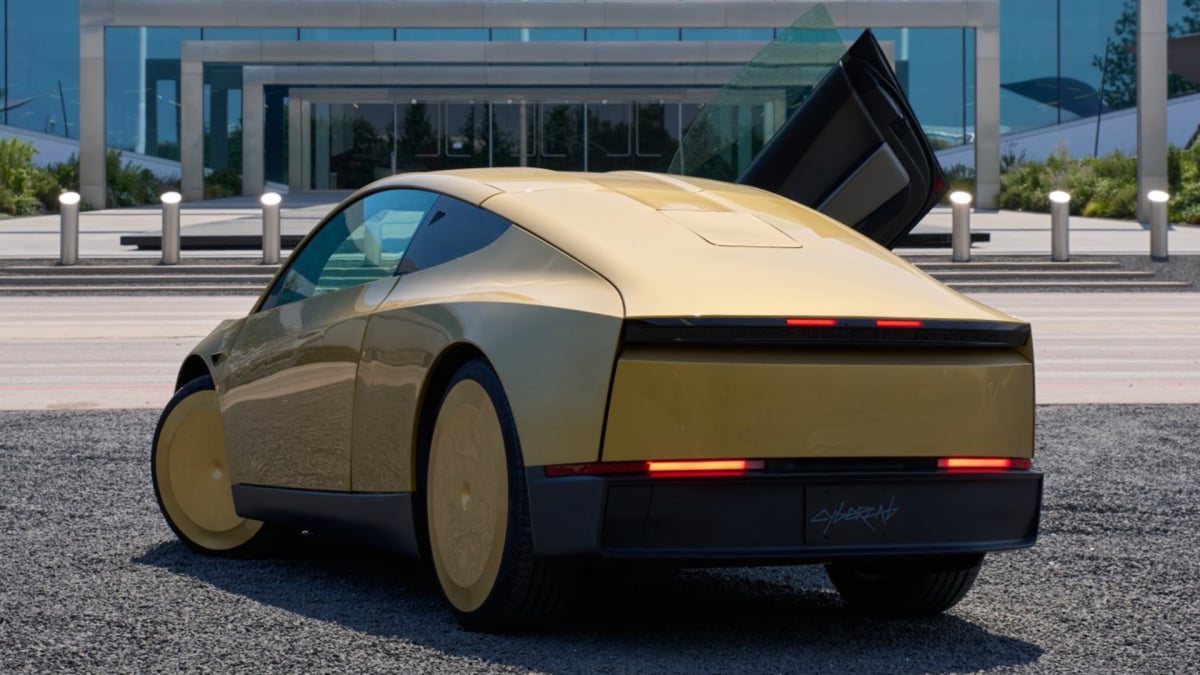
Tesla has unveiled its first Cybercab equipped with integrated Starlink satellite connectivity. The autonomous vehicle, which was showcased this week by Tesla’s Robotaxi division, features a built-in Starlink antenna visible on the exterior of the vehicle.
The addition has raised questions about necessity, given that Cybercabs are expected to operate initially in densely populated urban centers where 5G networks are readily available. The satellite system adds cost, weight, and operational complexity to vehicles that already contain 5G connectivity hardware. Starlink technology is traditionally designed to serve remote regions lacking conventional broadband infrastructure.
CEO Elon Musk addressed the apparent mismatch by pointing to future bandwidth demands. He cited research indicating that artificial intelligence-generated traffic could overwhelm internet capacity within five years, surpassing human traffic by a thousand-fold margin. According to Musk, Starlink represents the only infrastructure capable of handling the substantial data requirements this scenario would create.
The integration also highlights growing synergies between Tesla and SpaceX, Musk’s satellite internet company. Recent speculation about a potential merger between the two corporations has intensified since SpaceX’s major public offering earlier this year, suggesting the companies may eventually consolidate operations spanning transportation, energy, artificial intelligence, and space technology.
Originally reported by Mashable →
About the Author