
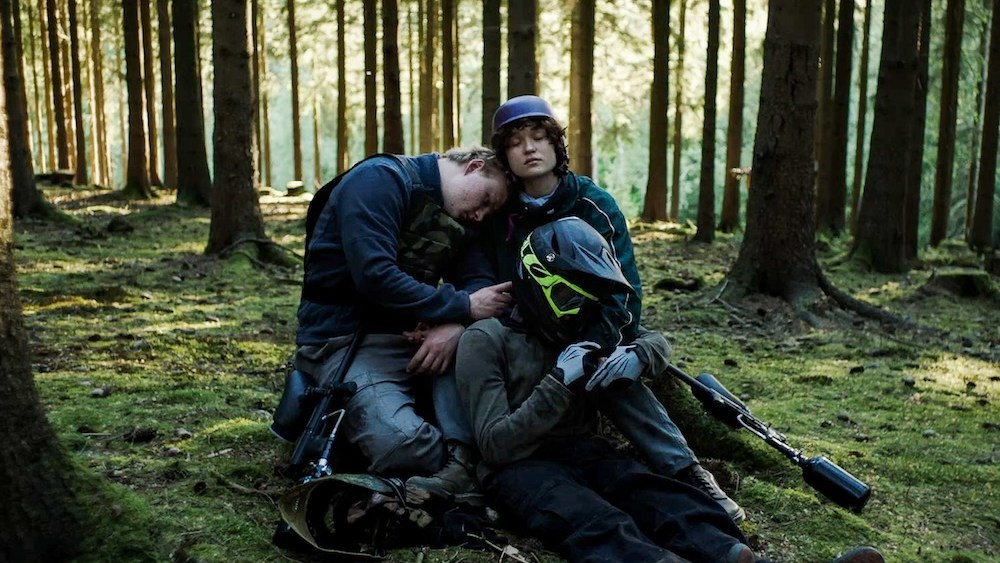
Director Jannis Lenz’s directorial debut “Oasis” explores the complexities of adolescence through the story of three social outcasts navigating their high school years. Following a humiliating incident shared on social media, the trio retreats into the woods surrounding their German town to forge their own alternative world. What begins as a refuge from social rejection gradually transforms into an increasingly intense cycle of ritualistic behavior that both bonds and isolates the characters from the outside world.
The film centers on Lukas, a sensitive and introspective student whose friendship with Andi, a new arrival whose family recently moved to the area, causes his already fragile social standing to deteriorate. When Maya, a musically talented girl living nearby, joins their circle, the three develop an unusual support system. However, their coping mechanisms grow increasingly peculiar and concerning, raising questions about whether their interdependence provides genuine emotional support or leads them toward unhealthy psychological territory.
Lenz, trained in the Austrian formalist tradition, employs a deliberate and controlled aesthetic that mirrors the film’s themes. Cinematographer Alexander Dirninger’s detached visual approach and the haunting sound design by Nora Czamler and Benedikt Palier create an unsettling atmosphere that reflects the characters’ internal struggles. The film maintains an ambiguous stance on whether the teenagers’ isolation represents healing or deepening damage, leaving viewers to grapple with uncomfortable questions about adolescent bonding and survival.
Originally reported by Variety →
About the Author