
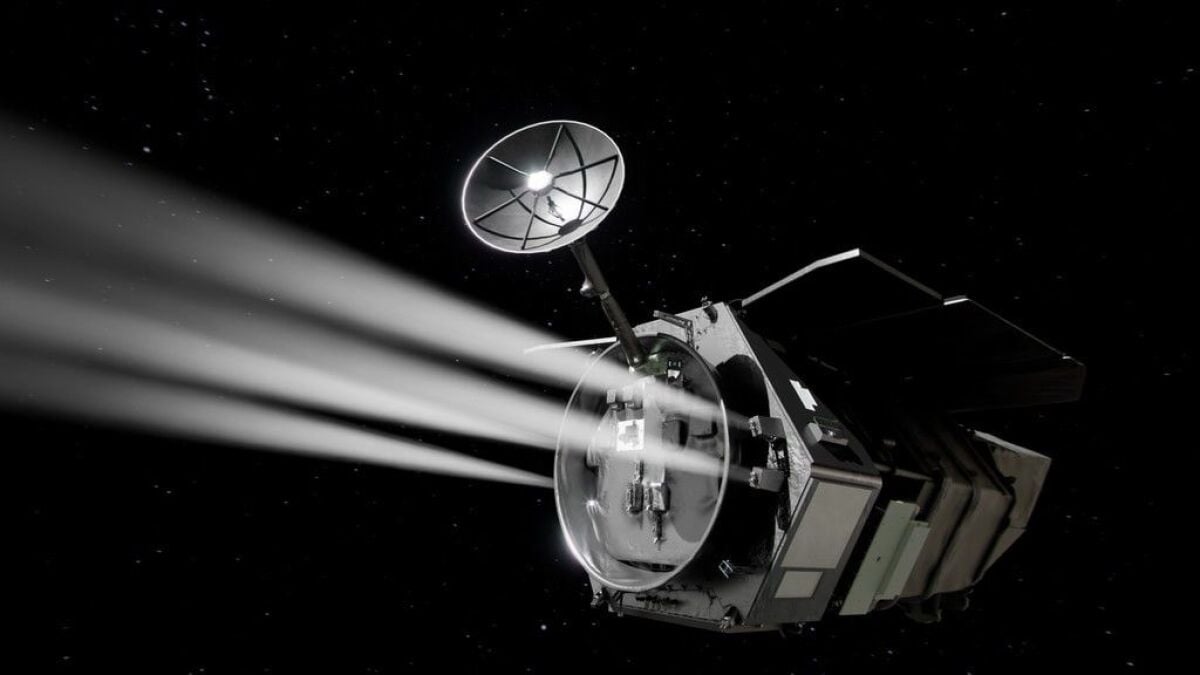
NASA’s Nancy Grace Roman Space Telescope successfully launched on August 30, 2026, and is now en route to its observation post approximately one million miles from Earth. Over the coming months, mission controllers will carefully navigate the spacecraft through space, deploy its specialized equipment, and conduct thorough testing of all systems before the observatory begins its infrared survey of the cosmos. The telescope will arrive at the second sun-Earth Lagrange point, or L2, the same gravitational location where the James Webb Space Telescope currently operates.
During the 100-day journey to L2, the team will execute multiple critical operations. Mission controllers will gradually unfold protective panels and a sunshield designed to regulate temperature, deploy a communications antenna for transmitting data back to Earth, and systematically test every spacecraft component including power systems, navigation controls, data processors, and engines. According to Roman’s integration and test scientist Jeremy Perkins, the same engineers who built and tested the telescope in laboratories will oversee these orbital operations to ensure optimal performance.
Once Roman approaches its destination, technicians will activate the science instruments, including the Wide Field Instrument for capturing detailed infrared images and the Coronagraph Instrument for detecting faint nearby planets. The three-month commissioning phase overlaps with the journey, allowing teams to begin calibration work before the spacecraft reaches L2. Engineers will conduct focus adjustments, stability measurements, and practice data transmissions to prepare for the full mission ahead.
NASA plans to release the telescope’s inaugural images in January 2027, showcasing its capabilities for studying distant galaxies, star-filled regions near the Milky Way’s center, and searching for hidden planets. Following successful commissioning, Roman will begin its five-year primary mission focused on mapping over one billion galaxies, monitoring transient cosmic events, and discovering planets throughout our galaxy.
Originally reported by Mashable →
About the Author