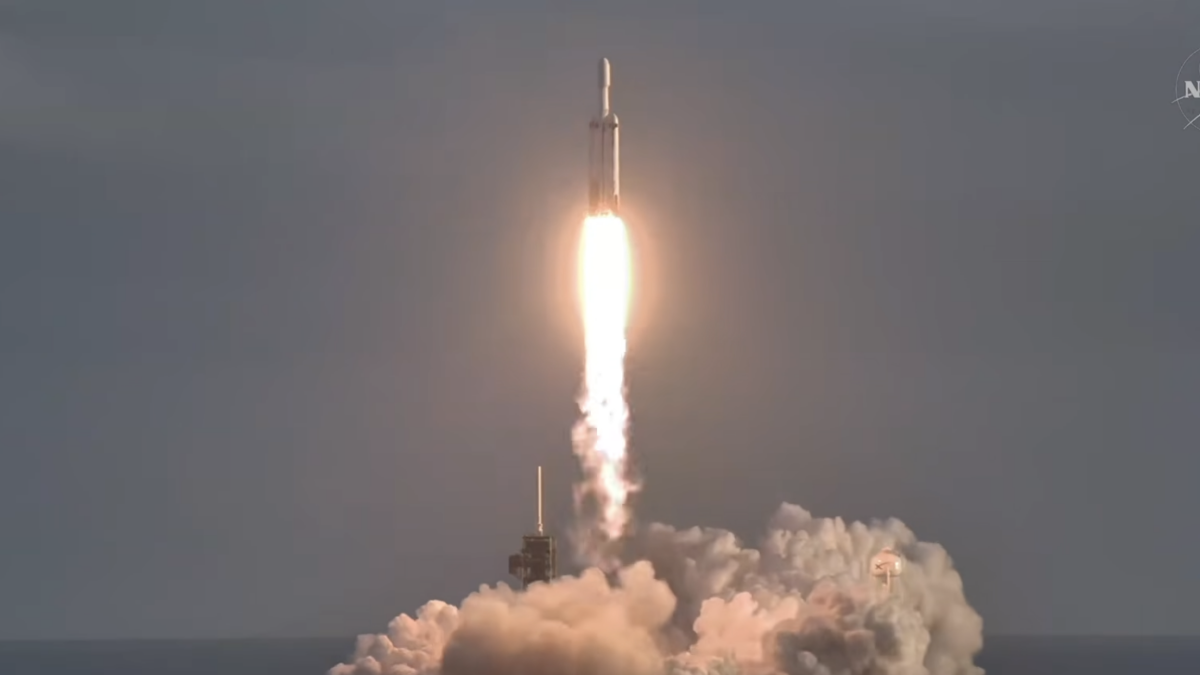
NASA’s Nancy Grace Roman Space Telescope successfully launched Sunday morning from Cape Canaveral, Florida, aboard a SpaceX Falcon Heavy rocket. The observatory is now traveling toward an orbit approximately one million miles from Earth, where it will conduct groundbreaking astronomical research. The mission represents a major milestone in space-based astronomy and carries a total lifecycle cost of approximately $4.3 billion.
The Roman telescope is engineered to revolutionize our understanding of the cosmos by investigating dark matter, dark energy, and distant exoplanets. Equipped with a nearly 8-foot primary mirror and advanced instrumentation including a 300-megapixel infrared camera and coronagraph instrument, the observatory will generate unprecedented volumes of scientific data. According to NASA officials, Roman will transmit approximately 1.4 terabytes of information daily—a capability that would require the Hubble Space Telescope roughly 100 years to achieve in a single month.
The telescope will position itself at the second Lagrange point, the same orbital location as the James Webb Space Telescope. From this vantage point, Roman can observe vast expanses of sky without terrestrial interference. The mission carries a five-year primary objective, though engineers designed the spacecraft to potentially receive in-space refueling to extend its operational lifetime. NASA anticipates releasing the first images from Roman in January 2027, following a three-month transit period and calibration phase.
Originally reported by Mashable →
About the Author