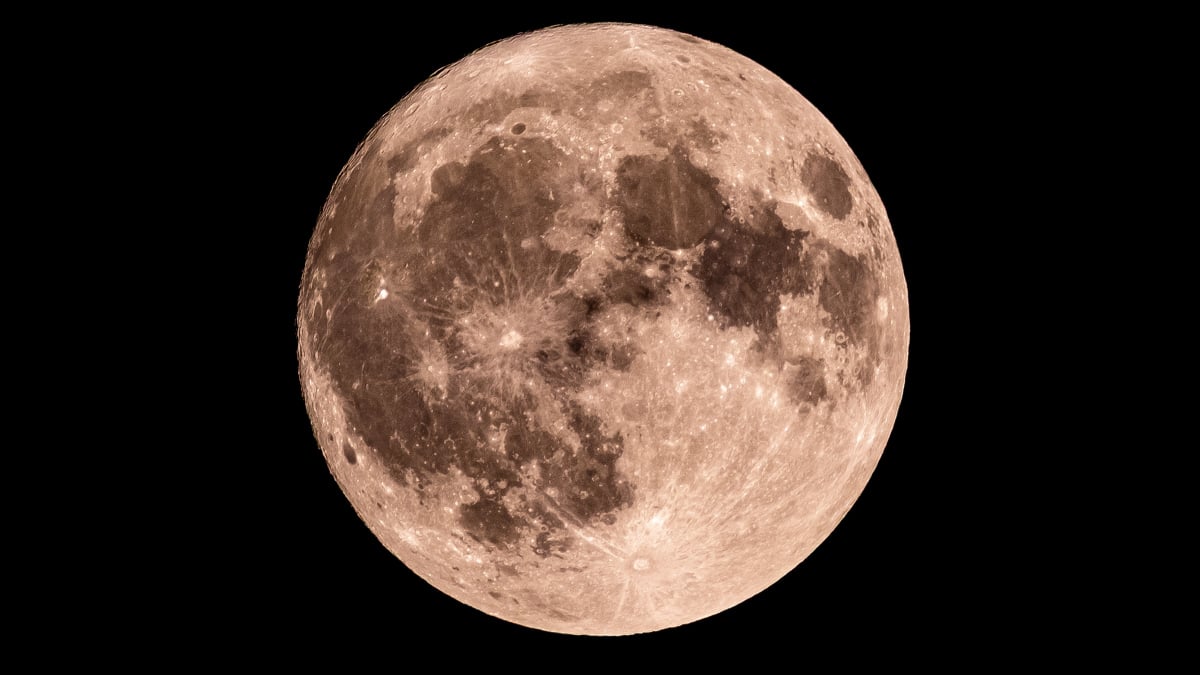
On August 19, the Moon enters the Waxing Crescent phase, with approximately 42% of its surface illuminated according to NASA’s tracking data. During this phase, the lit portion gradually expands on the right side of the Moon for Northern Hemisphere observers, while Southern Hemisphere viewers will see the illumination growing on the left. This nightly brightening continues as the lunar cycle progresses.
Stargazers can observe several prominent lunar features without optical equipment on this date, including the Mares Crisium, Tranquillitatis, and Fecunditatis. Those with binoculars gain access to additional details such as the Endymion Crater, Posidonus Crater, and Mare Nectaris. Telescope users can push further, spotting the Apollo 16 and 17 landing sites along with the Rupes Altai mountain range.
The lunar cycle spans approximately 29.5 days as the Moon orbits Earth, with its changing appearance determined by the relative positions of the Sun, Earth, and Moon. The Moon transitions through eight distinct phases during each cycle, ranging from the New Moon’s complete darkness to the Full Moon’s complete illumination. The next Full Moon will occur on August 28, marking the continuation of this natural celestial rhythm.
Originally reported by Mashable →
About the Author