
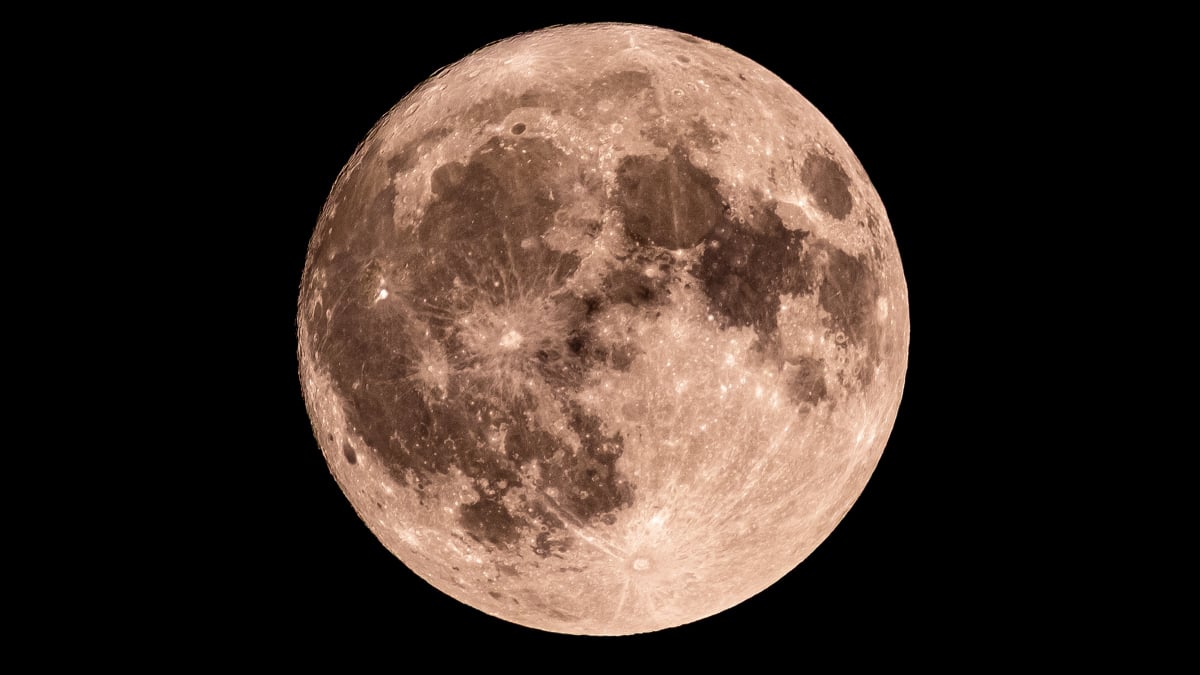
On August 17, the Moon enters the waxing crescent phase, displaying approximately 24% of its illuminated surface according to NASA’s Daily Moon Guide. During this stage of the lunar cycle, the visible portion gradually increases each evening as the Moon continues its journey around Earth.
Observers without optical equipment can spot two prominent lunar features tonight: the Mares Crisium and Fecunditatis. Those equipped with binoculars or a telescope will have the opportunity to view the Endymion Crater in greater detail. The enhancement provided by these instruments reveals surface details invisible to the naked eye.
The lunar cycle spans approximately 29.5 days and results from the changing alignment of the Sun, Earth, and Moon. This positioning determines how much of the Moon’s sunlit surface becomes visible from our planet. The cycle progresses through eight distinct phases, beginning with the new Moon and advancing through crescent and quarter phases before reaching the full Moon, then reversing the sequence. The next full Moon is scheduled for August 28.
Originally reported by Mashable →
About the Author