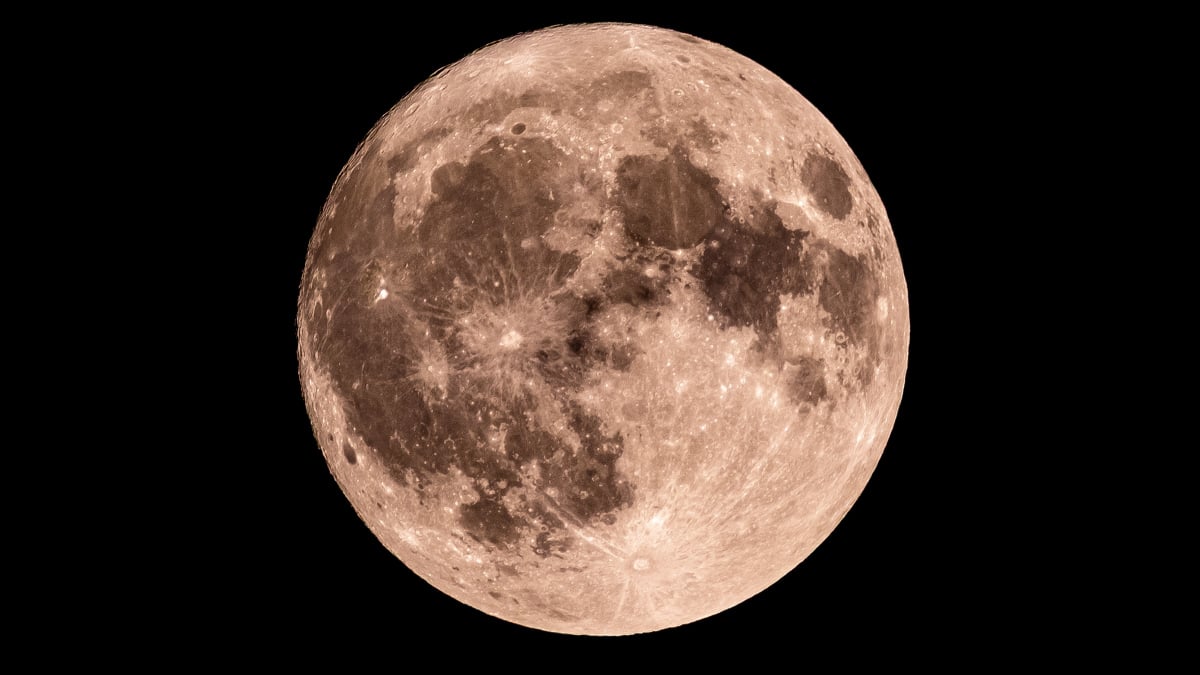
Following several nights of minimal visibility, the Moon has become bright enough on August 16 to reveal distinguishable surface features. Observers interested in lunar observation now have the opportunity to identify specific landmarks across its face.
On August 16, the Moon enters its Waxing Crescent phase with approximately 15% of its surface illuminated, according to NASA’s Daily Moon Guide. Stargazers equipped with only their naked eyes can observe the Mares Crisium and Fecunditatis regions. Those using binoculars or telescopes gain access to additional detail, including the Endymion Crater.
The Moon progresses through a consistent cycle lasting roughly 29.5 days as it orbits Earth. This monthly journey creates eight distinct phases, determined by the shifting alignment of the Sun, Earth, and Moon. The lunar surface transitions from invisible darkness to increasingly illuminated crescents, half-phases, and eventually complete illumination before repeating the sequence. The next Full Moon is scheduled to occur on August 28.
Originally reported by Mashable →
About the Author