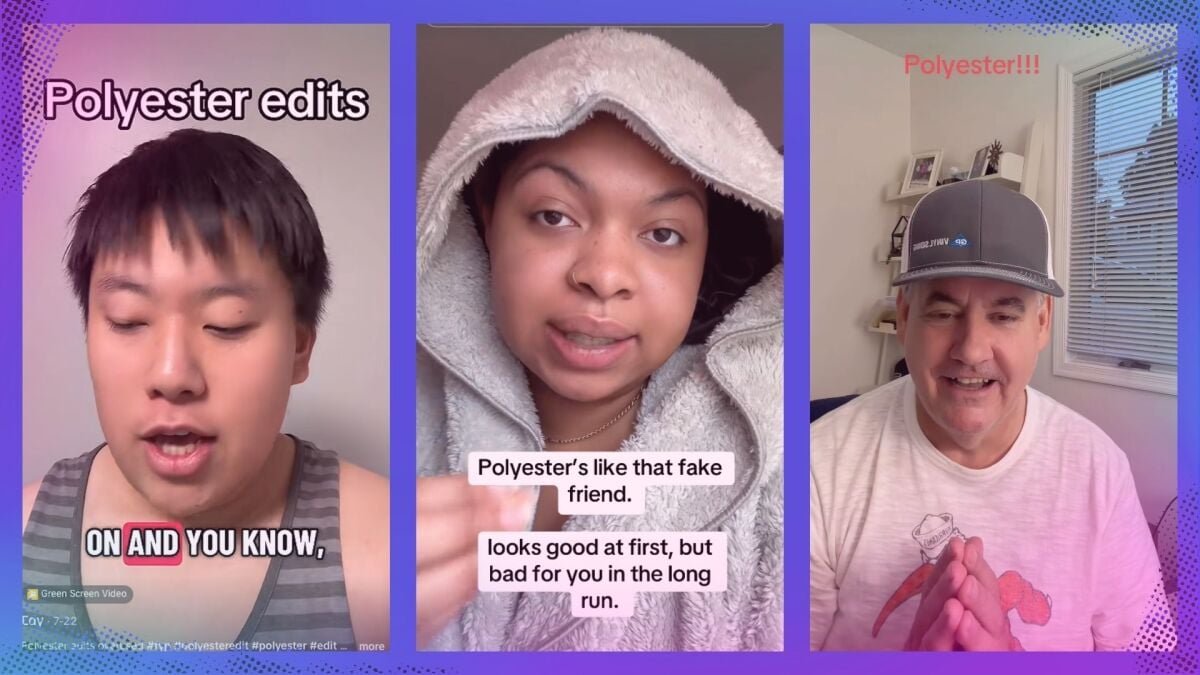
Generation Z has adopted “polyester” as a cutting insult to describe anything perceived as fake, cheap, or artificially manufactured. The term extends beyond the synthetic fabric itself to encompass a broader critique of inauthenticity. According to the emerging slang, something polyester might appear polished on the surface but conceals a fundamentally artificial or low-effort nature underneath. The insult can target influencer brands, overly edited content, or even personal relationships deemed inauthentic.
The term’s origin traces back to TikTok videos featuring heavily stylized fan edits of superhero characters like Spider-Man and Iron Man. These videos, which debuted around late 2025, combined rapid flashing imagery with metallic soundtracks and excessive visual effects. When a particularly chaotic Spider-Man edit went viral in summer 2026, viewers began labeling such videos as “polyester edits” to mock their flashy yet cheaply constructed aesthetic. The descriptor eventually escaped editing communities entirely.
The insult draws legitimacy from polyester’s negative reputation in online fashion circles. Young consumers have increasingly criticized finding the synthetic plastic-based material in expensive clothing and actively seek natural alternatives like cotton and wool instead. While polyester itself has legitimate applications, internet discourse typically associates it with fast fashion’s disposable products. This cultural baggage made “polyester” an effective metaphor for anything manufactured, trendy, or algorithmically designed.
The slang joins a broader arsenal of online insults—including “slop,” “larping,” and “NPC”—that critique perceived fakeness and low quality in digital culture. As artificial intelligence and mass-produced content proliferate online, “polyester” provides users with a fabric-focused framework for dismissing what they view as generic or inauthentic.
Originally reported by Mashable →
About the Author