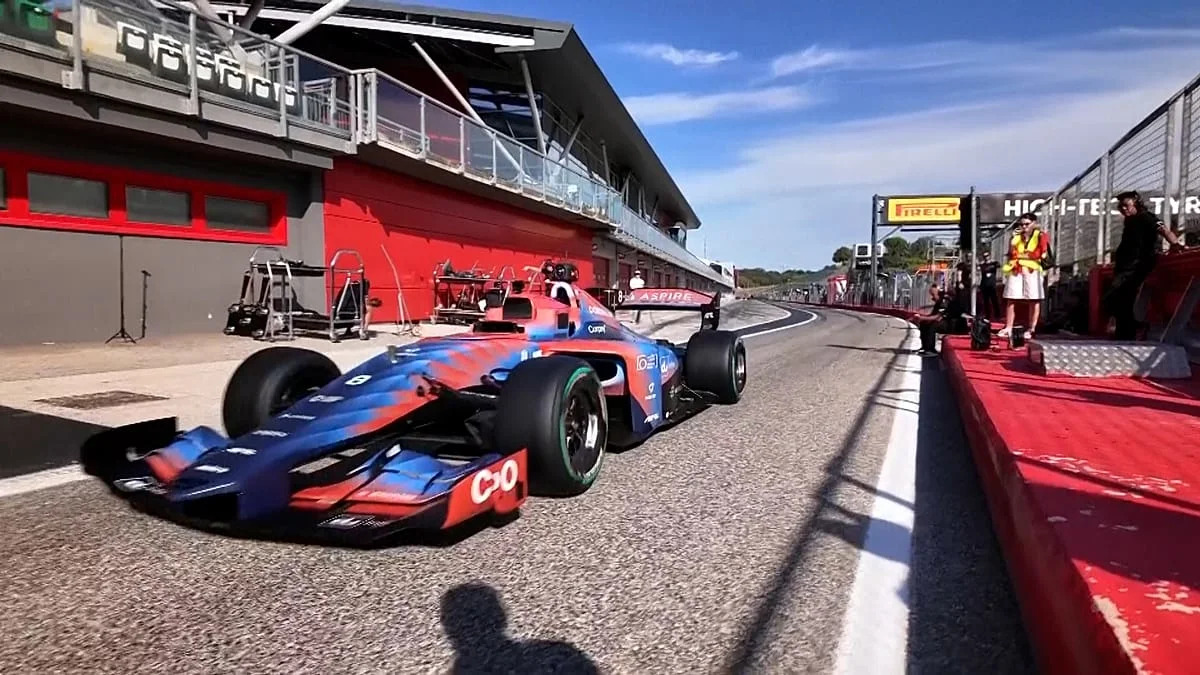
Italy’s historic Imola racing circuit recently hosted a groundbreaking competition: Europe’s first autonomous multi-car racing event. The Abu Dhabi Autonomous Racing League organized the event, which featured five competing teams from Germany, Italy, and the United Arab Emirates operating fully driverless vehicles on the professional track.
The competing cars, modified versions of single-seaters from Japan’s Super Formula series, lack traditional driver controls such as steering wheels and pedals. Instead, they rely on advanced sensor technology including cameras, radar, and lidar systems to navigate the circuit independently. Engineers and mechanics from each team monitored telemetry data throughout the competition, though they had no ability to intervene once racing began. Kinetiz from the UAE ultimately claimed victory in the 12-lap race.
Beyond determining a winner, the event served to showcase autonomous vehicle development and address significant engineering challenges. Racing at high speeds against multiple vehicles simultaneously creates complex scenarios difficult to replicate in standard road testing. Despite the technological sophistication on display, organizers acknowledged that artificial intelligence cannot yet fully replicate human driver intuition and creativity.
Event leaders emphasized that the competition aims to build public confidence in autonomous technology. As concerns about artificial intelligence continue to grow, demonstrating advanced autonomous capabilities in a familiar sporting context may help broader acceptance of self-driving systems in everyday applications.
Originally reported by Sports.yahoo →
About the Author