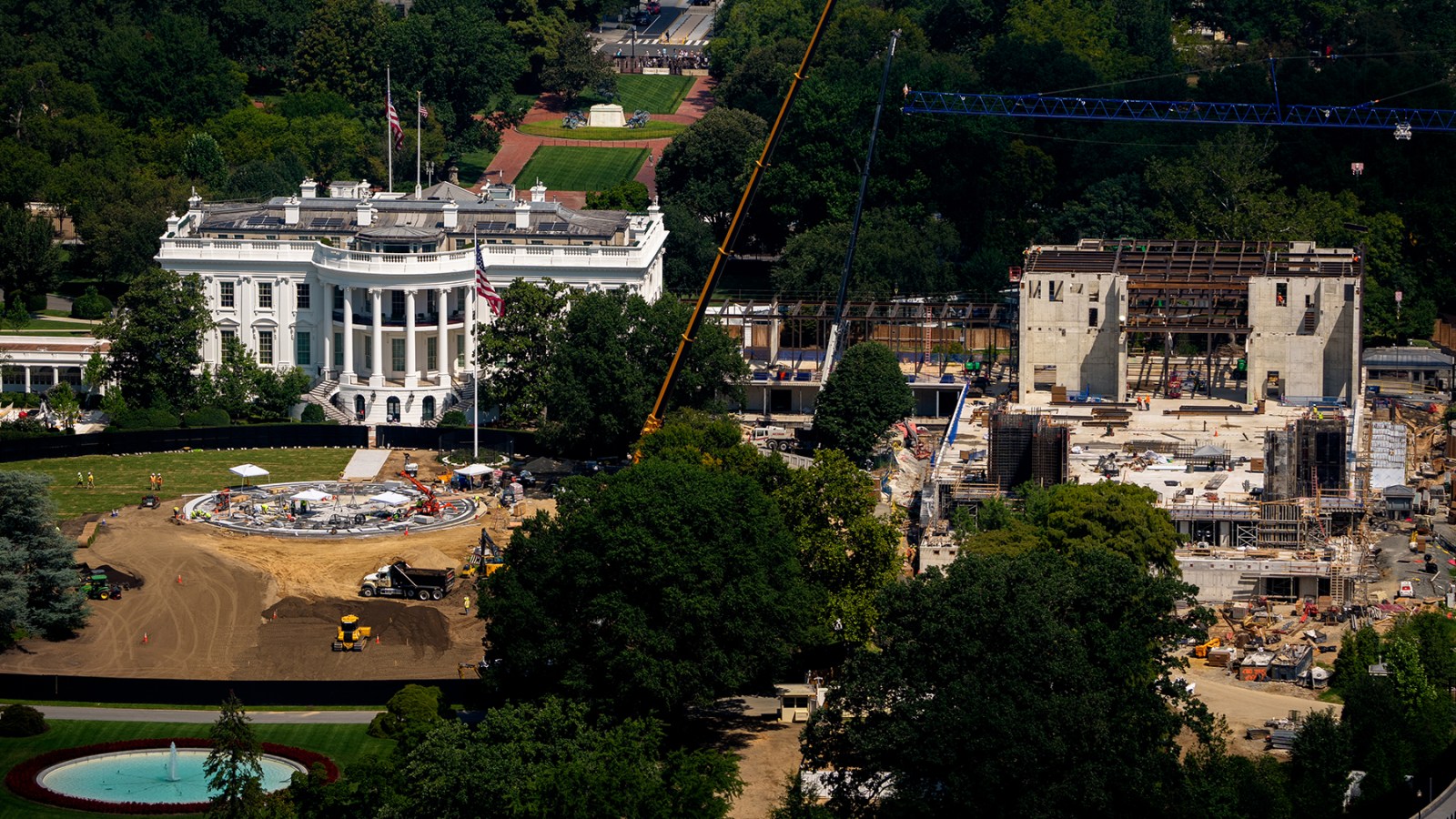
The Supreme Court has permitted President Trump to proceed with a controversial demolition project at the White House, clearing the way for continued construction despite significant legal concerns. In a 5-4 decision, the court’s conservative majority ruled that the National Trust for Historic Preservation lacked standing to challenge the work, sidestepping the fundamental question of whether the project was constitutional. Chief Justice John Roberts dissented alongside the three Democratic-appointed justices, arguing that Congress never authorized the destruction of the East Wing.
The administration’s plans call for replacing the demolished East Wing with a 90,000-square-foot luxury ballroom, more than double the size of the current structure. Construction crews are working around the clock to complete the project, with government lawyers claiming the structure is already “beyond the point of return.” The Trump administration initially promised the ballroom would be funded entirely through private donations from major corporations, though project costs have reportedly escalated significantly.
Legal experts and preservation advocates argue this sets a dangerous precedent for executive power. The Constitution grants Congress authority over federal property, and for two centuries White House renovations have required congressional approval. Critics contend that the current legal framework fails to protect public assets from unilateral presidential action, leaving Americans unable to defend their shared historical heritage from executive decisions made without democratic input.
Originally reported by Rollingstone →
About the Author