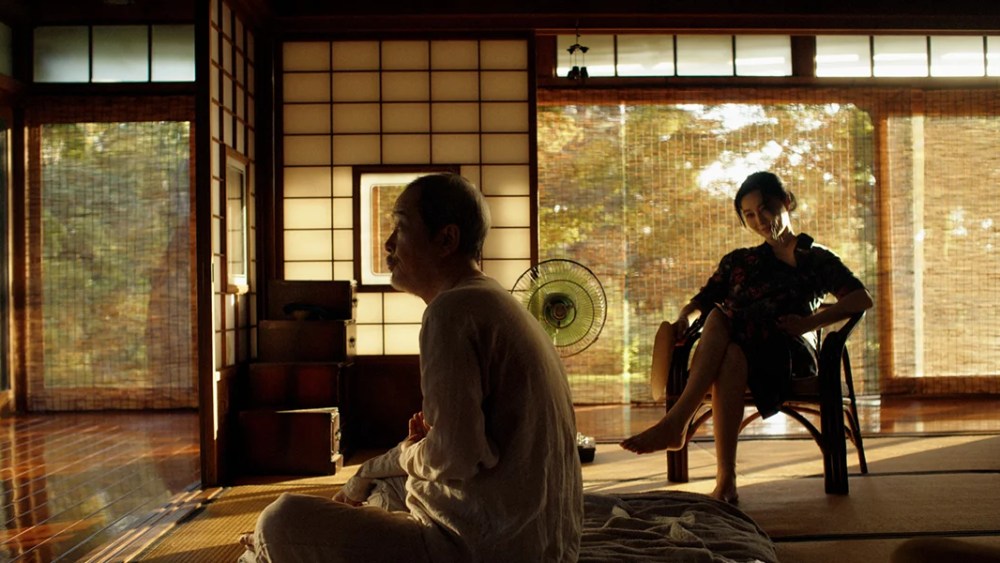
Director Wayne Wang brings Jun’ichirō Tanizaki’s provocative 1961 novel to the screen in a contemporary adaptation that attempts to reimagine the source material for modern audiences. The story follows a retired man recovering from a stroke who becomes obsessed with his daughter-in-law, pursuing increasingly inappropriate interactions with her while spending lavishly on gifts.
Wang’s interpretation introduces significant changes to the original narrative, softening the protagonist’s character and adding new plot elements absent from Tanizaki’s text. Rather than preserving the novel’s unflinching exploration of an unapologetic egotist, the film humanizes its central figure through additional storylines, including a subplot involving a crow and references to dementia. These modifications shift the film’s thematic focus toward elder care concerns rather than the author’s examination of unrestrained desire in old age.
While Wang demonstrates strong technical direction through carefully composed interior settings and Tokyo locations, the expanded narrative ultimately feels sluggish. Lily Franky delivers a convincing performance as the aging protagonist, and Fan Bingbing transforms her character into a more complex figure with added backstory. However, these character developments work against the film’s momentum rather than enhancing it, resulting in a final product that struggles to justify its departures from the literary source material.
Originally reported by Variety →
About the Author