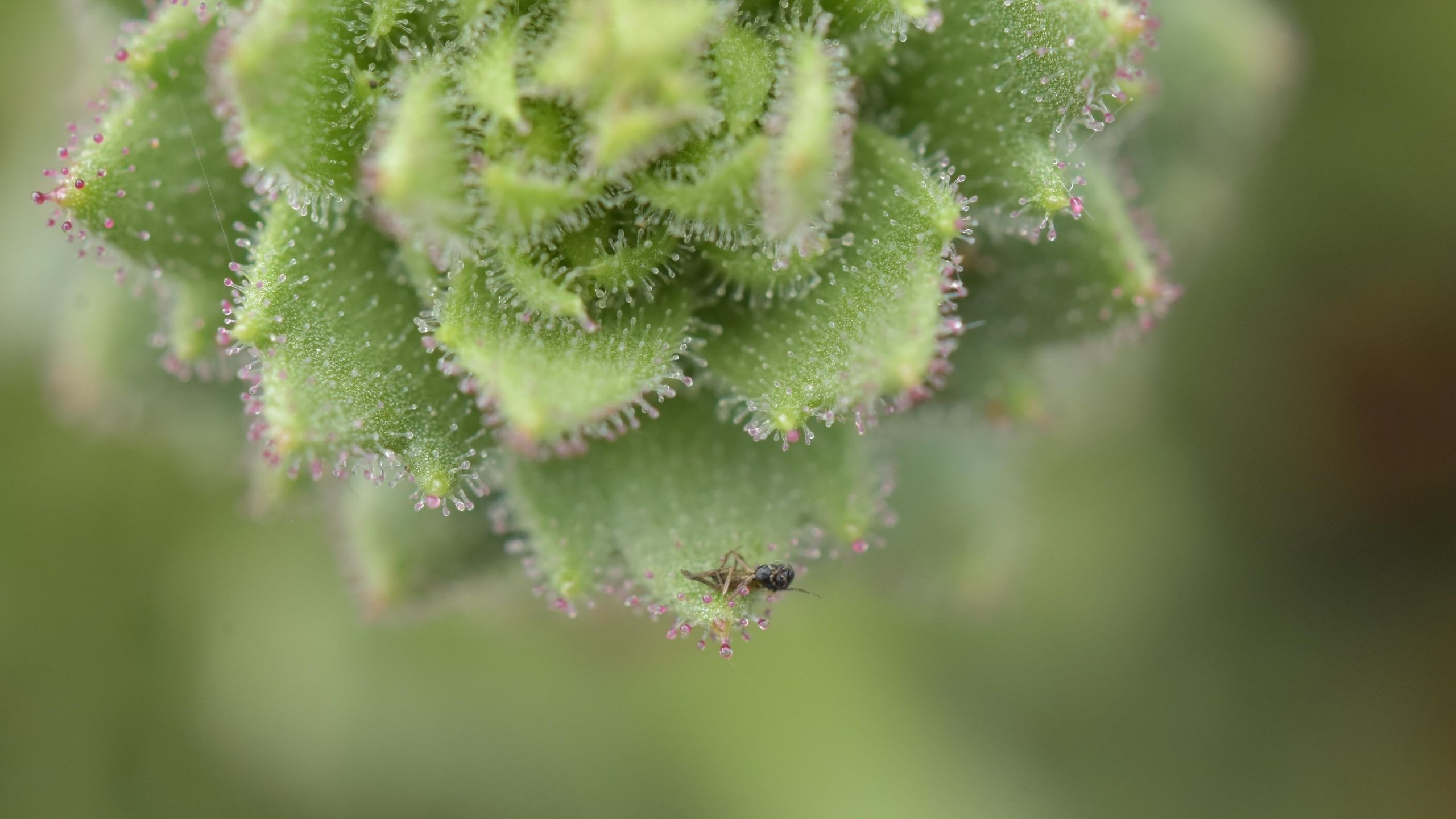
Researchers have validated a prediction Charles Darwin made over 150 years ago by confirming that a Chinese flowering plant is truly carnivorous. The species, Saxifraga candelabrum, inhabits high-altitude regions of the Hengduan Mountains in southwest China, where it has evolved to supplement nutrients from its nutrient-poor environment by consuming insects.
The plant features sticky hairs on its stems and branches that trap small insects, particularly nonbiting midges. Scientists proved the plant’s carnivorous nature by demonstrating it possesses digestive enzymes and can absorb nutrients from captured prey. Using labeled nitrogen in fruit flies, researchers showed the plant successfully processes insect matter, distinguishing it from merely “protocarnivorous” species that trap but do not digest insects. These findings were published in Nature Communications.
This marks the first confirmed case of carnivory within the saxifrage plant group. Douglas Soltis, a biology professor at the Florida Museum of Natural History, noted that the plant’s adaptation contrasts with other carnivorous species, which typically grow in boggy environments. The high-altitude, dry habitat where Saxifraga candelabrum thrives represents an unusual ecological niche for such a specialized feeding strategy.
Experts suggest Darwin’s initial hypothesis may apply to related plant species as well. Additional members of the Saxifragaceae family possess similar sticky hairs and frequently attract insects, raising the possibility that carnivory could be more prevalent among flowering plants than previously understood.
Originally reported by Livescience →
About the Author