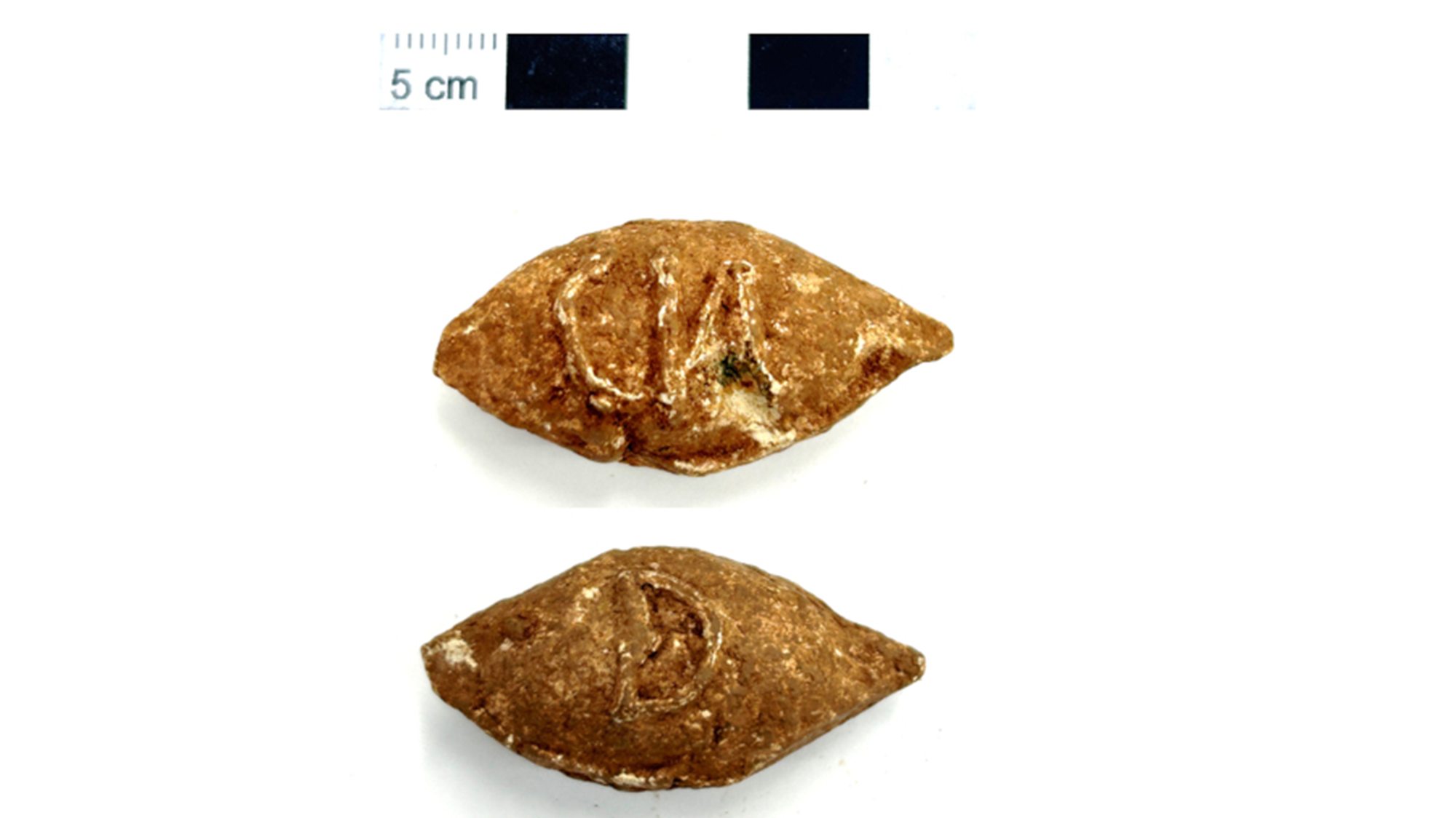
Archaeologists have uncovered evidence of a significant military confrontation in Spain’s Pyrenees mountains during the first century B.C. A team from the Autonomous University of Barcelona discovered lead sling projectiles at an ancient Roman encampment in the Cerdanya region, suggesting an uprising by the indigenous Ceretani people against Roman occupation. The findings help pinpoint the location of a previously documented but poorly understood conflict that occurred nearly two thousand years ago.
The discovery includes numerous artifacts that establish the site’s historical context with remarkable precision. Two of the lead projectiles bear inscriptions identifying them as belonging to Gnaeus Domitius Calvinus, the Roman provincial governor, confirming the incident took place in 39 B.C. Additional artifacts recovered from the camp at Collet de Jovell include Roman military equipment, coins, and decorative items, further supporting the archaeological timeline.
The Ceretani had resisted Roman expansion across the Iberian Peninsula for approximately two centuries before launching this particular assault. Although the uprising ultimately failed to expel the invaders, the discovery demonstrates that Rome’s conquest of the region involved prolonged conflict rather than swift military victories. Historical records indicate the Roman response was severe, with some soldiers even facing punishment for retreating during the ambush, illustrating the intensity of resistance the empire encountered while consolidating control over Iberia.
Originally reported by Livescience →
About the Author