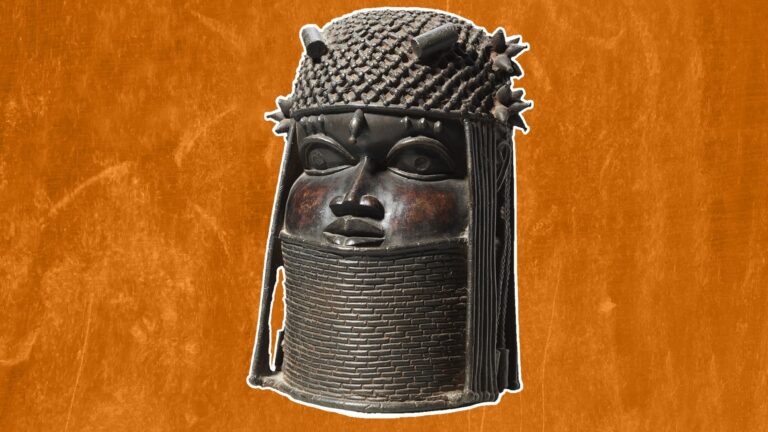
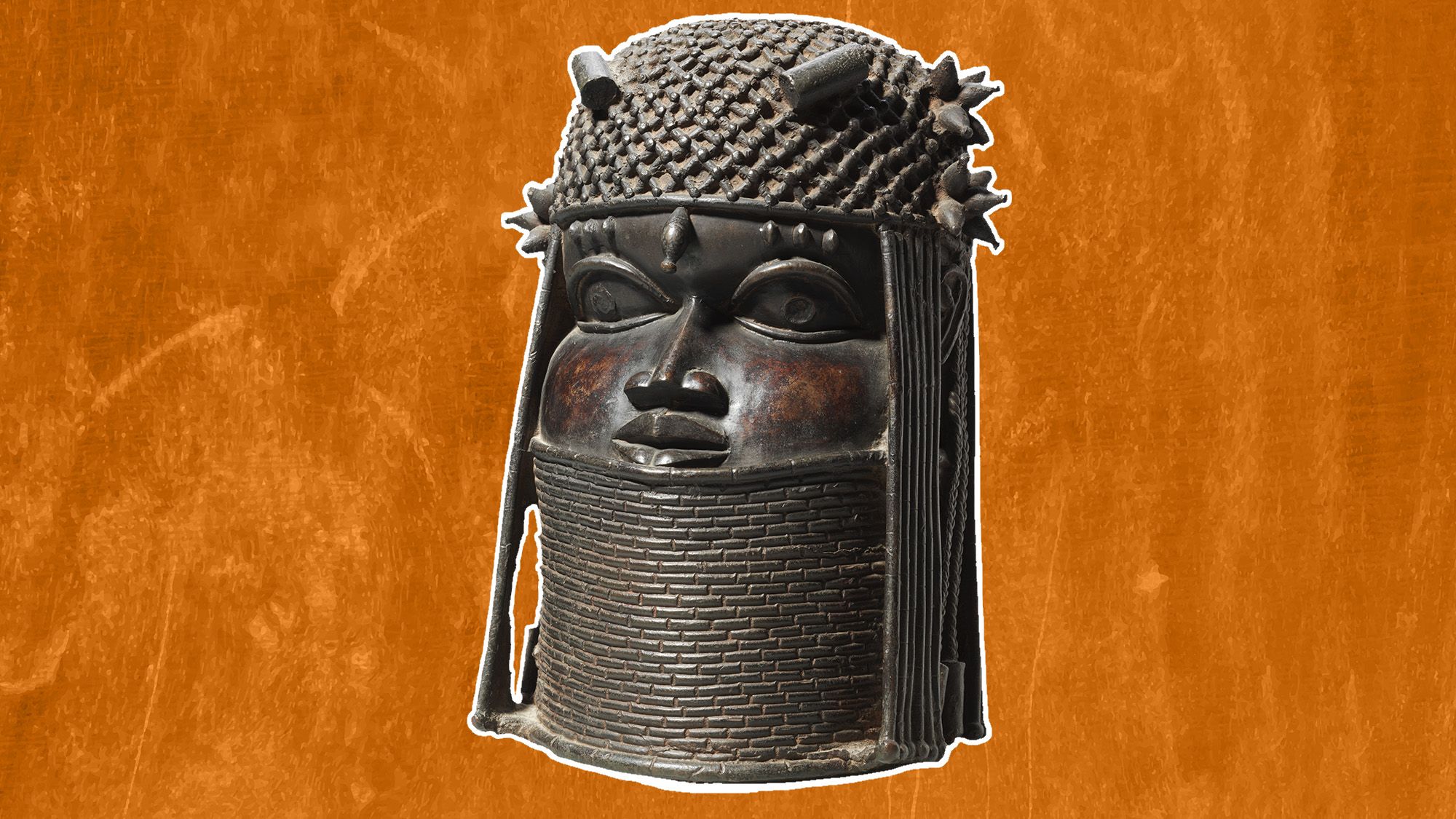
A mid-16th century copper-alloy sculpture housed at the Cleveland Museum of Art represents a significant example of West African royal artistry. The brass head, standing approximately one foot tall, depicts an oba—a traditional ruler from the Kingdom of Benin in present-day Nigeria. Such busts served important ceremonial purposes, with each new oba commissioning a commemorative sculpture of their predecessor to be displayed on an ancestral altar within the palace.
The artifact was created using a specialized lost-wax casting technique by artisans from the Igun Eronmwon, a hereditary guild of metalworkers who crafted objects exclusively for Benin royalty. The sculpture’s intricate details—including layered coral necklaces and a lattice-patterned beaded cap—conveyed symbols of power rather than ornamentation. The open crown originally supported an elaborate carved elephant tusk that documented the ruler’s achievements and significant life events.
The bust’s presence in an American museum traces back to 1897, when British colonial forces invaded the Benin palace and looted thousands of artifacts. The sculpture later entered Western collections through French dealer Louis Carré, who distributed many of these pieces to museums during the 1930s. This seizure initiated a centuries-long displacement of Benin’s cultural heritage across international institutions.
Recent years have witnessed growing repatriation efforts, with German museums, the Smithsonian Institution, and Dutch institutions returning Benin artifacts to Nigeria. The British Museum, holding over 900 such objects, remains the largest Western repository but has not yet officially repatriated any pieces despite Nigeria’s formal requests.
Originally reported by Livescience →
About the Author