A Man Went to Hospital With Blood in His Urine. Doctors Found a Needle in His Heart.
 Somehow, it kept beating.
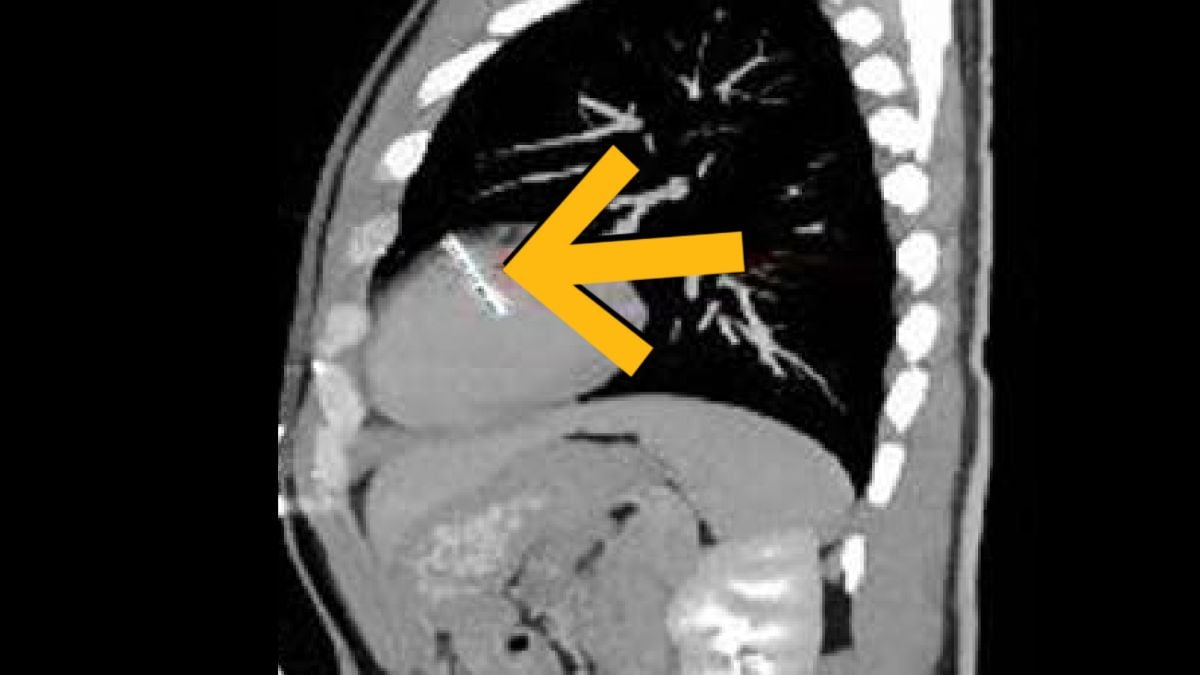
Physicians in China have documented a striking medical case in which a 36-millimeter sewing needle was discovered embedded in a patient’s heart. The 35-year-old man initially sought treatment for urinary symptoms and blood in his urine, presenting with otherwise normal vital signs. Imaging studies revealed the metallic object had penetrated the protective sac surrounding the heart, with its tip extending into the left ventricle—the heart’s main pumping chamber.
The discovery unveiled a more complex situation. Medical scans identified multiple needles throughout the patient’s body, located in his abdominal wall, pelvis, bladder, hip bone, and hip muscle. Several needles embedded in the bladder showed calcified deposits on their surfaces, suggesting they had been present for an extended period. The left ventricle showed signs of dilation and early abnormality, indicating damage from the foreign object.
Surgical intervention was required to remove the cardiac needle first, followed by subsequent procedures to extract the needles from the bladder region. While the patient recovered successfully, the origin of the needles remains unexplained. Doctors suspect possible self-insertion, particularly given the patient’s intellectual disability and a history of needle removal two years prior, though this behavior pattern was not documented in his current medical records.
This case highlights the diagnostic challenge posed by cardiac foreign bodies. Without obvious symptoms, needle penetration of the heart can remain undetected for extended periods. Since 1967, only 34 similar cases involving self-inflicted cardiac needles have been reported in medical literature.
Originally reported by Sciencealert →
About the Author