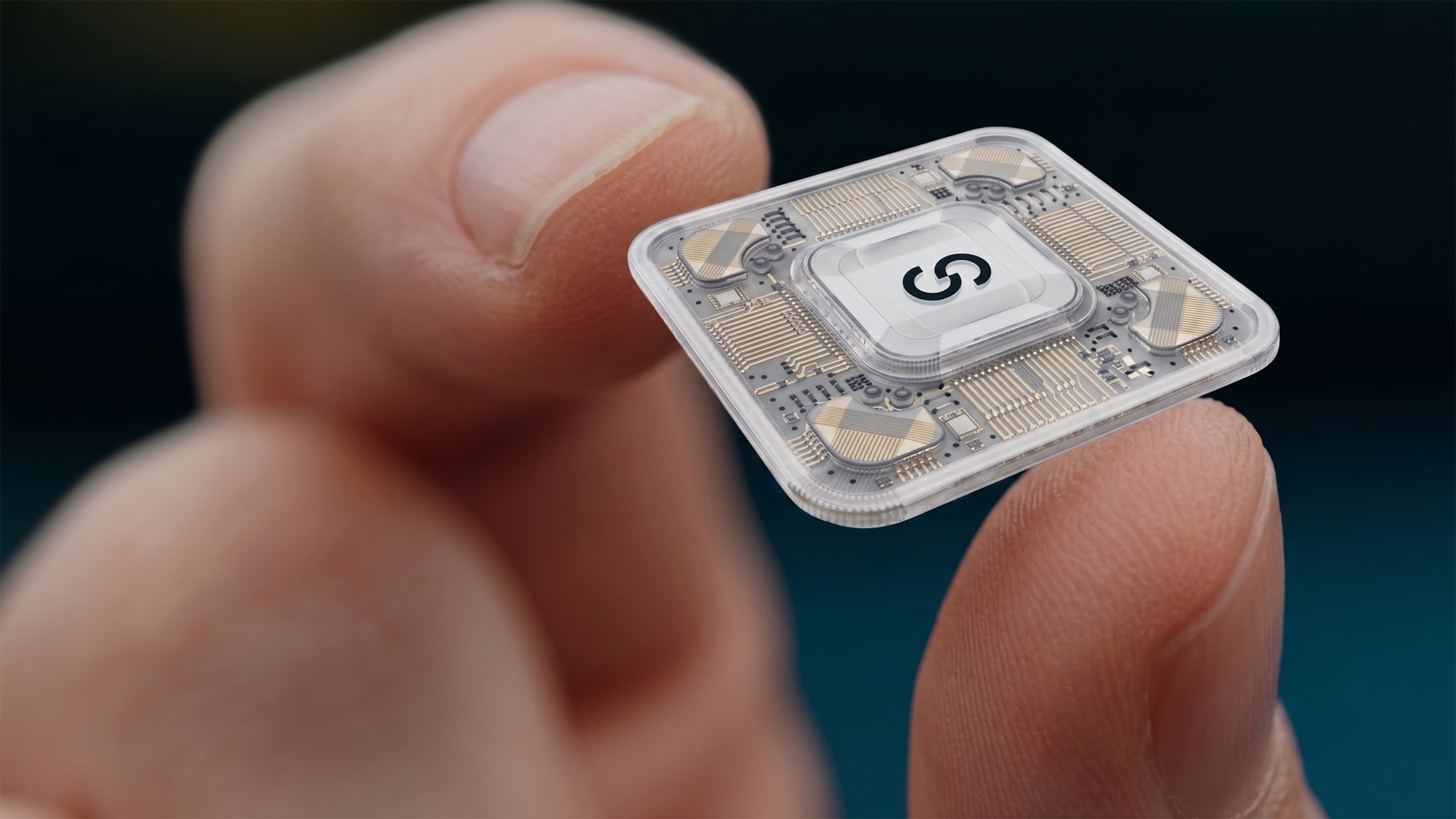
A German startup called Saxon Q has unveiled what it claims is the world’s first portable quantum computer to surpass 10 qubits while operating at room temperature. The system uses nitrogen-vacancy defects in synthetic diamonds as quantum bits, allowing it to perform complex computations without requiring the extreme cooling systems needed by competing technologies. Current models feature up to 128 qubits in rack-mounted configurations, with 512-qubit versions planned for next year.
The breakthrough relies on a materials innovation involving sulfur co-implantation during the diamond creation process. By adding sulfur atoms alongside nitrogen vacancies, researchers achieved greater control over individual qubits and improved their reliability. Saxon Q reports achieving error rates as low as 99.98% fidelity in single-qubit operations, matching performance levels from established competitors like IBM and MIT, though independent verification remains pending.
A key advantage of Saxon Q’s technology is its practical accessibility. Unlike systems requiring specialized infrastructure and constant monitoring, these diamond-powered computers can simply plug into standard electrical outlets and fit into conventional computer racks. This simplicity could prove valuable for edge computing applications where cloud connectivity creates unacceptable delays, such as autonomous vehicles and robotics operations.
However, scaling remains a significant challenge. Current diamond chips support only 8 to 16 qubits each, and combining hundreds or thousands of qubits onto single arrays will be necessary to reach the processing power of larger quantum systems. The company projects advancing toward 10,000 qubits after 2030.
Originally reported by Livescience →
About the Author