
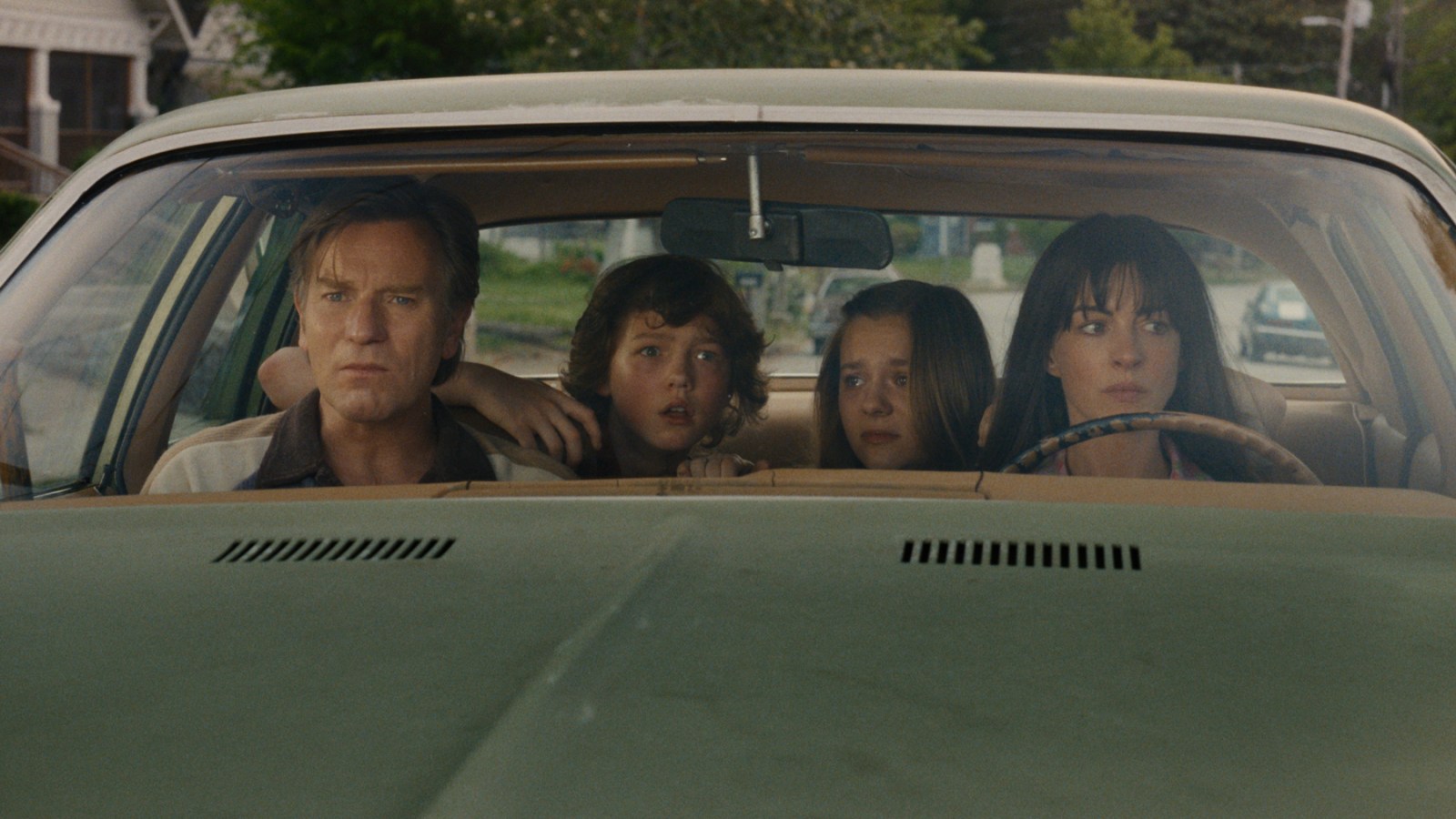
David Robert Mitchell’s “The End of Oak Street” stands as a remarkable tribute to 1980s blockbuster cinema, specifically channeling the spirit of Steven Spielberg’s most iconic works. The film reimagines a quintessential suburban neighborhood transported back in time, where dinosaurs suddenly threaten the peaceful existence of everyday families, creating the kind of spectacle that defined summer entertainment decades ago.
Set in 1982, the story centers on the Pratt family and their neighbors as they navigate both personal crises and an extraordinary disaster. Greg Pratt struggles with financial pressures and self-doubt while his teenage son Brian faces typical adolescent troubles. Meanwhile, his daughter Audrey pursues ambitious academic goals. Anne Hathaway portrays Denise Platt, a frustrated neighbor yearning for escape from her unfulfilling life. These deeply flawed individuals are forced to confront not only their internal conflicts but also the chaos erupting around them.
Mitchell crafts a narrative where the sudden appearance of extinct prehistoric creatures serves as both literal and metaphorical chaos, compelling the community to abandon petty grievances and band together for survival. Rather than explaining the scientific mechanics behind the dinosaur invasion, the film prioritizes character development and family bonding amid catastrophe. The director successfully captures the blockbuster energy of classic Spielberg cinema while grounding the story in authentic human struggle, making this modern homage a compelling entertainment experience.
Originally reported by Rollingstone →
About the Author