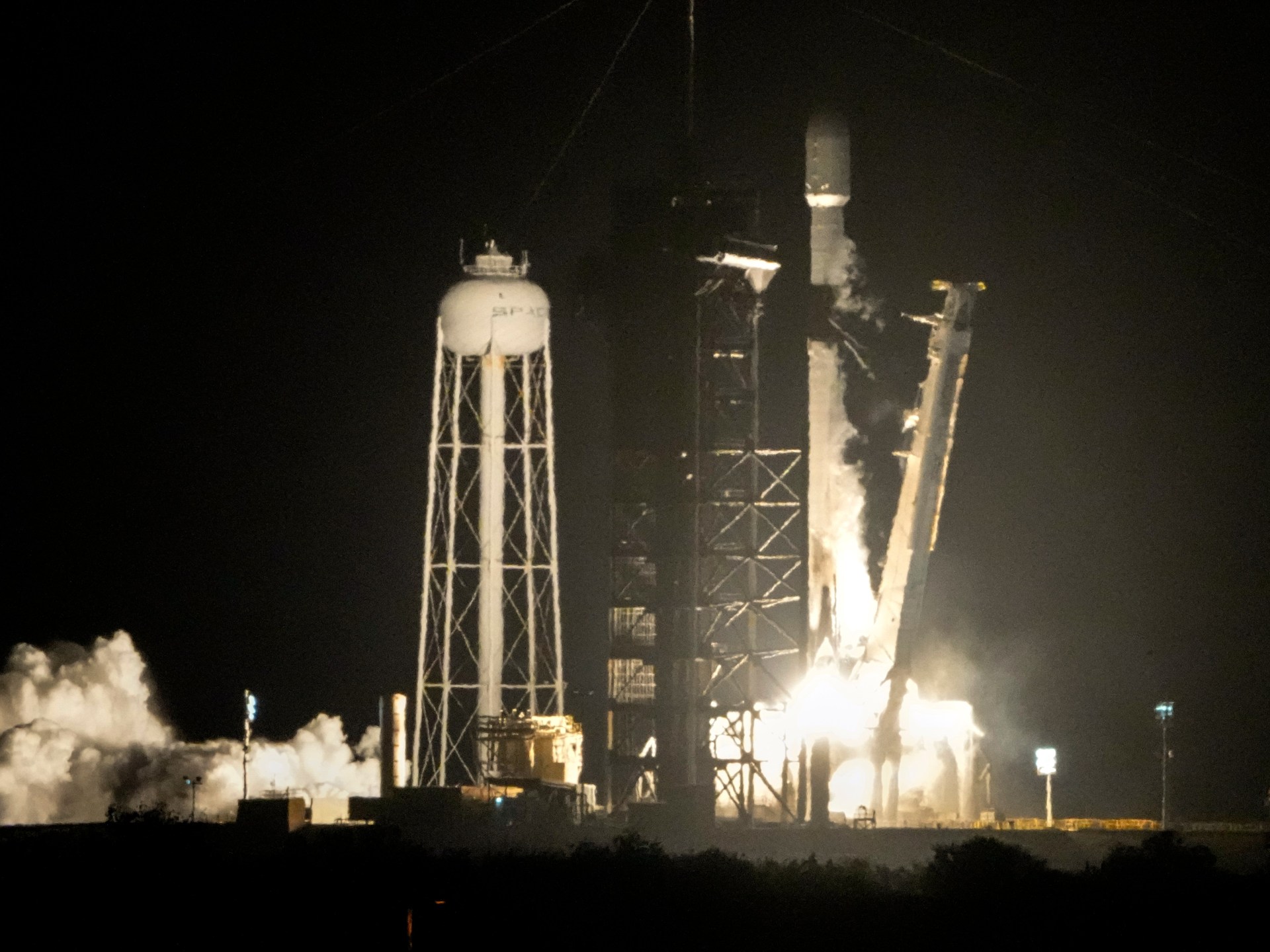
A four-tonne piece of debris from a SpaceX Falcon 9 rocket has collided with the Moon’s surface, marking a significant event in space exploration. The object, which was the second stage of a rocket launched in early 2025, struck the lunar landscape near Einstein Crater at extremely high speed—approximately 8,700 kilometres per hour—with an impact force equivalent to roughly three tonnes of TNT.
According to SpaceX officials, the collision was unintentional but ultimately unavoidable. Over an 18-month period, gravitational forces from the Sun, Earth, and Moon gradually altered the debris’s trajectory, putting it on a direct course toward the lunar surface. The company explained that insufficient fuel reserves made it impossible to prevent the crash. Typically, discarded rocket components either burn up when re-entering Earth’s atmosphere or fall into remote ocean areas.
The incident has attracted significant scientific interest. NASA’s Lunar Reconnaissance Orbiter and South Korea’s Danuri spacecraft have repositioned their instruments to observe and document the collision site. Researchers plan to study the newly formed crater and analyze dust ejected from the impact to better understand how cosmic collisions shape the lunar surface.
Wednesday’s crash represents only the second confirmed instance of space debris accidentally striking the Moon. The previous occurrence took place in March 2022, when a Chinese Long March rocket component impacted the lunar far side, creating an unusual double crater formation.
Originally reported by Aljazeera →
About the Author