
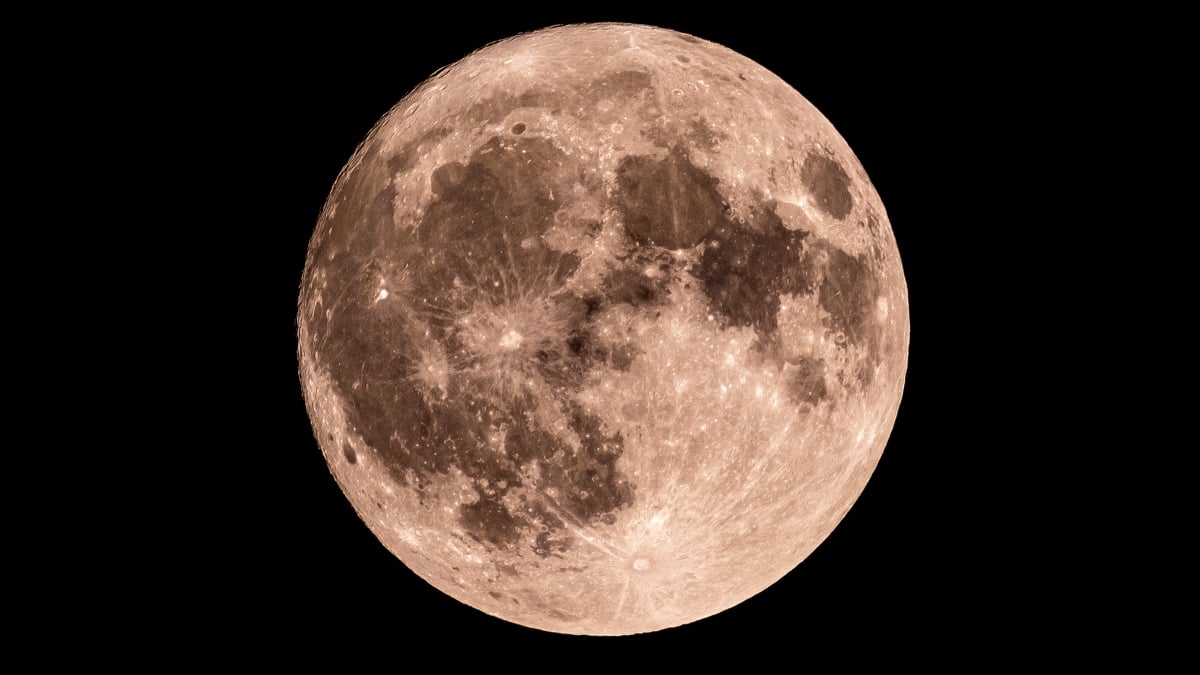
On August 30, observers can witness the Moon in its waning gibbous phase, with nearly all of its surface illuminated and visible from Earth. According to NASA’s tracking data, this phase occurs as the lunar body continues its orbit and begins to lose its fully illuminated appearance following the recent full moon.
Stargazers with clear skies need only their naked eyes to spot several prominent lunar features, including Mare Serenitatis, the Copernicus Crater, and Oceanus Procellarum. Those equipped with binoculars can observe additional details such as Mare Frigoris, the Archimedes Crater, and the Apennine Mountains. Telescope users will gain access to more detailed views, including the Apollo 15 and 16 landing sites and the Rima Ariadaeus formation.
The Moon completes a full lunar cycle approximately every 29.5 days as it orbits Earth. Its changing appearance throughout this period depends on how the Sun illuminates the portion of the Moon visible from our planet. The next full moon will occur on September 26, offering observers another opportunity to view the satellite in its fully lit state.
Originally reported by Mashable →
About the Author