
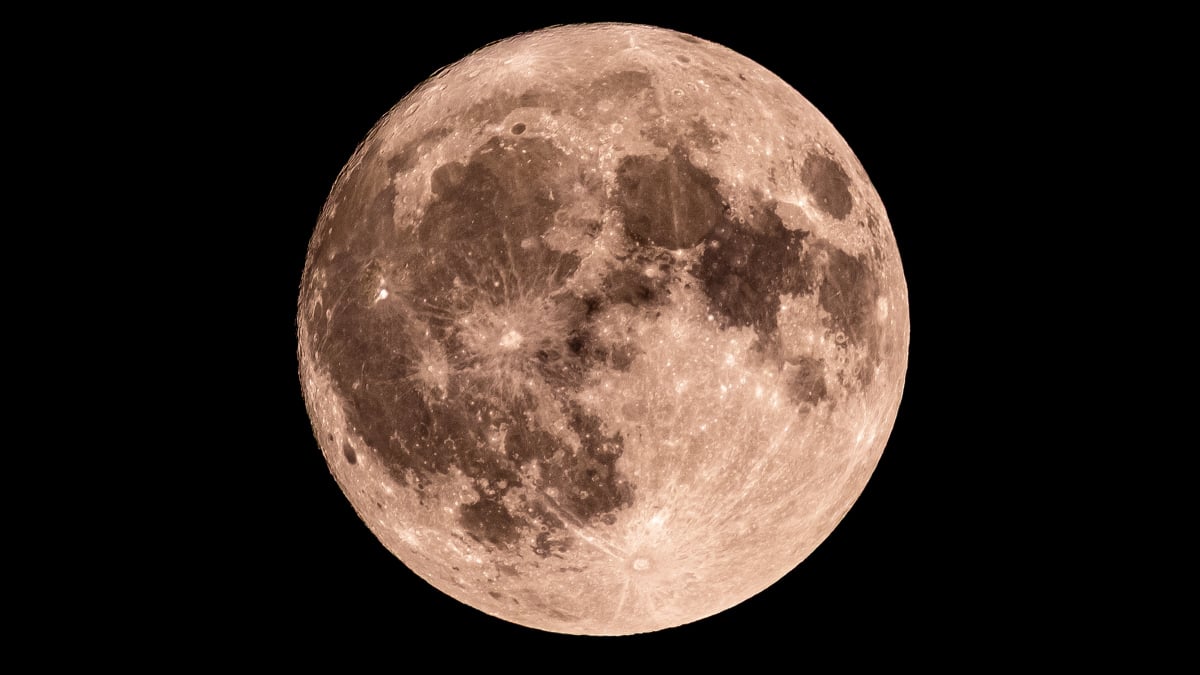
The lunar cycle has entered its waning phase following the recent Full Moon, meaning the Moon’s illumination will gradually decrease each evening until reaching the New Moon stage. On August 29, according to NASA’s tracking data, the Moon is in the Waning Gibbous phase with 99 percent of its surface still visible to observers on Earth.
Stargazers require no special equipment to observe notable lunar features on this date. Using only the naked eye, viewers can identify the Mare Serenitatis, Copernicus Crater, and Oceanus Procellarum. Those with binoculars gain access to additional landmarks including the Endymion and Posidonius Craters and Mare Nectaris. Telescope users can distinguish the Apollo 15 and 16 landing sites and the Rupes Altai formation.
The Moon completes its orbital cycle around Earth approximately every 29.5 days, moving through eight distinct phases determined by its position relative to the Sun and Earth. This positioning controls how much of the Moon’s sunlit side is visible from our planet. The next Full Moon will occur on September 26, continuing the predictable pattern of lunar phases throughout the year.
Originally reported by Mashable →
About the Author