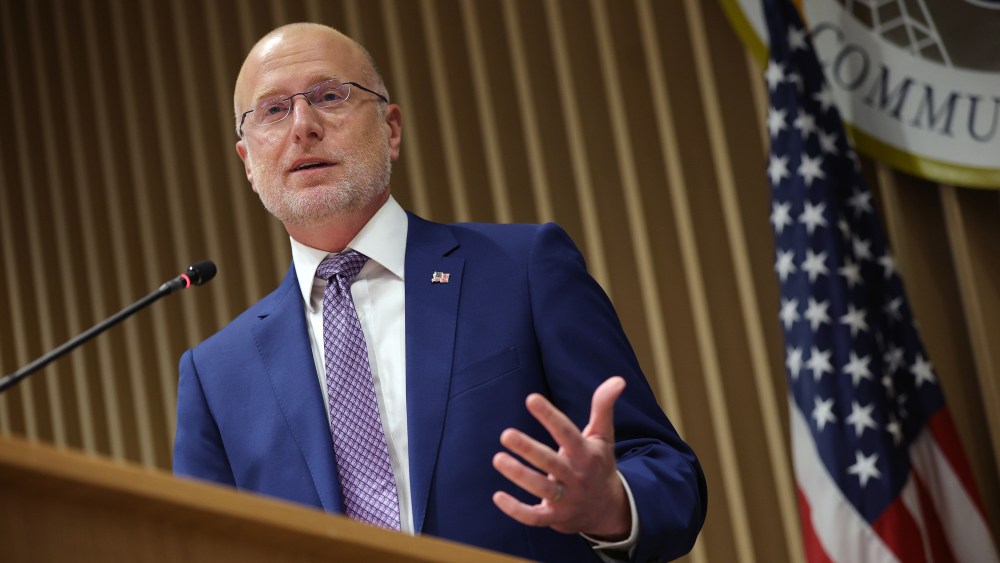
The Federal Communications Commission has voted to eliminate a decades-old restriction on television station ownership, advancing a priority for major broadcasters. The 2-1 decision, which followed party lines, was championed by FCC Chair Brendan Carr and Republican Commissioner Olivia Trusty. The move removes a cap that limited any single entity to owning stations reaching no more than 39 percent of U.S. television households, a rule that originated from mid-20th century broadcast regulations.
Carr defended the decision by arguing that television broadcasters face outdated restrictions while technology giants like Google, Netflix, Meta and Amazon operate without similar limitations. He contended that allowing greater consolidation would strengthen local broadcasters financially and enable them to invest more in community news and programming. Carr drew parallels to the decline of local newspapers over recent decades, suggesting that excessive regulation contributed to their demise.
The decision faces significant opposition and legal hurdles. Democratic Commissioner Anna Gomez dissented sharply, arguing that Congress established the ownership cap through federal law in 2012 and that only Congress possesses the authority to change it. She cited support for this interpretation from former Republican FCC officials and prominent lawmakers. The ruling is expected to encounter legal challenges.
The decision carries particular significance for Nexstar Broadcasting, which has aggressively sought the cap’s removal. The company’s proposed acquisition of rival Tegna would result in unprecedented reach across 80 percent of U.S. television households. That merger currently faces court-imposed restrictions following a lawsuit by state attorneys general.
Originally reported by Variety →
About the Author