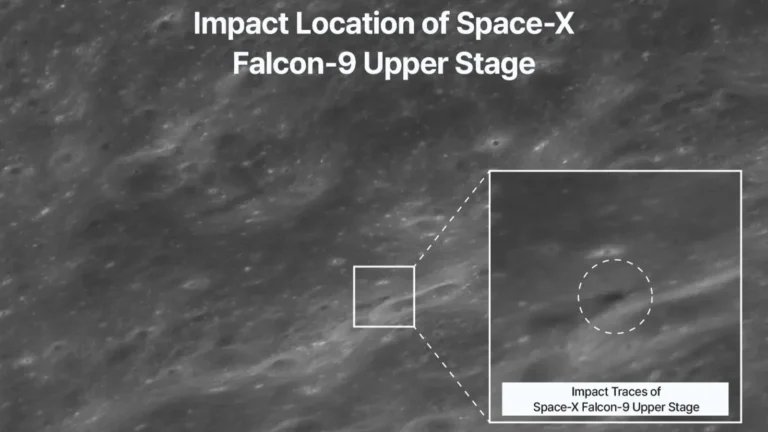
A discarded SpaceX Falcon 9 rocket component is set to collide with the lunar surface on August 5 at 2:35 a.m. EDT, traveling at approximately 5,436 miles per hour. The truck-sized upper stage has been orbiting Earth since 2005, when it delivered two privately owned lunar landers to orbit around the moon. Recent research suggests that observers equipped with telescopes across North and South America may witness this rare cosmic event.
While the initial impact flash will likely prove too faint for naked-eye observation, lasting less than a second and occurring on the sunlit side of the moon, the resulting debris plume offers better viewing prospects. Computer simulations indicate the ejected material could reach heights of up to 31 miles above the lunar surface, dispersing across an area spanning 112 miles from the impact zone. This plume should remain visible for approximately seven minutes as it scatters sunlight toward Earth, though observing it will require at least a four-inch telescope.
Professional and amateur astronomers worldwide are preparing observation campaigns for the event. Researchers emphasize that witnessing the plume presents valuable scientific opportunities, as studying the impact will help understand how debris travels across the lunar surface and could inform future missions planning permanent human settlements on the moon. Previous collisions of human-made objects on the lunar surface have yielded significant scientific discoveries, including evidence of subsurface ice near the lunar south pole.
Originally reported by Livescience →
About the Author