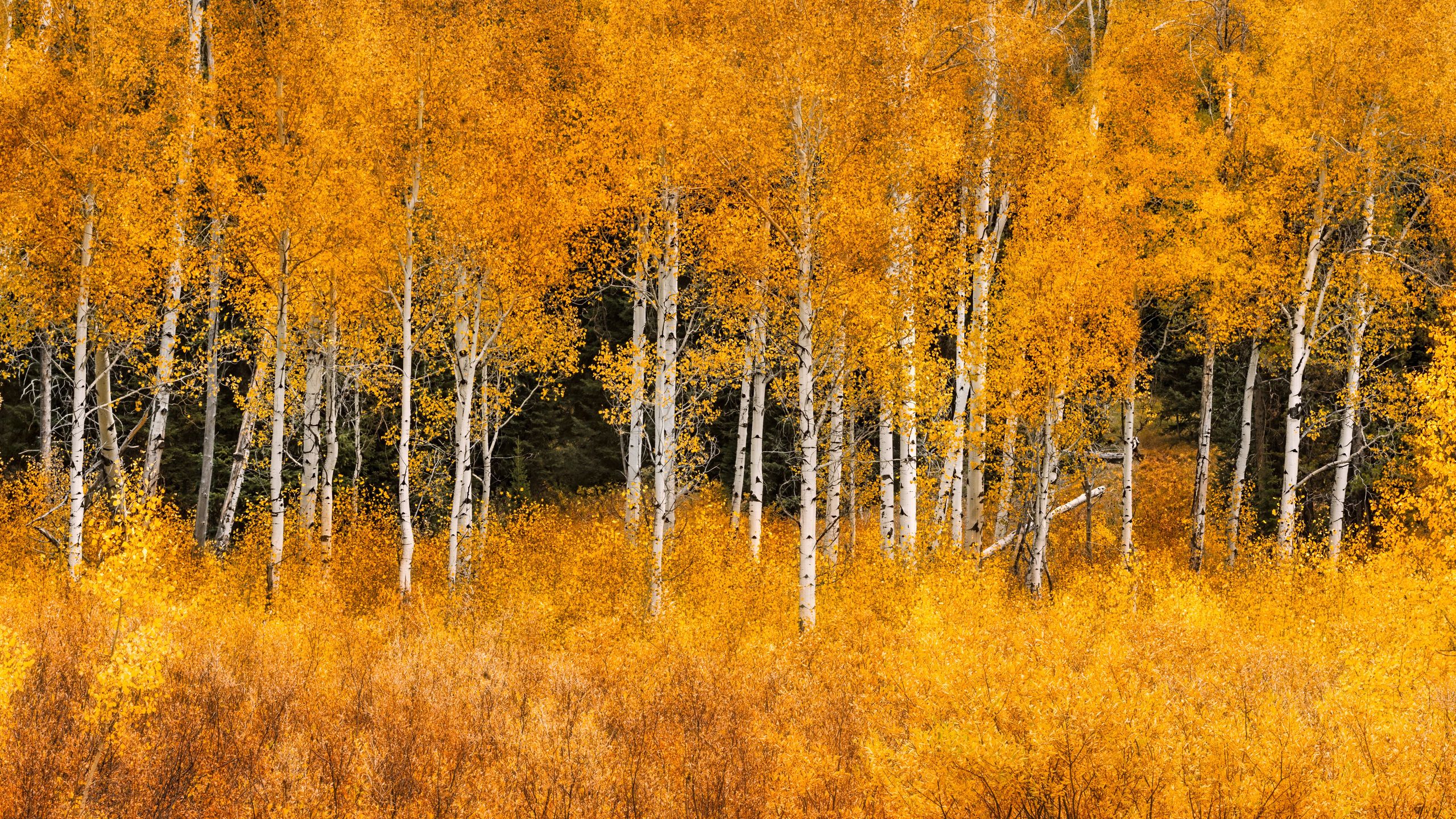
Recent research demonstrates that aspen forests offer significant protection against wildfires, even as climate change intensifies fire seasons across North America. A study published in Forest Ecology and Management found that large aspen stands burn less intensely than coniferous forests and can act as natural firebreaks. Although individual aspen trees ignite readily due to their thin bark, dense stands of these trees resist fire spread more effectively than stands of spruce or pine.
Researcher Flavie Pelletier analyzed satellite data from recent wildfires across Canada, including the country’s most destructive season in 2023, and compared this information with maps of dominant tree species. Her findings revealed that aspen trees appeared more than twice as frequently at fire perimeters as within burned zones, while conifers were equally present in both locations. Aspen’s effectiveness likely stems from multiple factors, including high moisture content in leaves and undergrowth, the absence of flammable resins, and leaf height that prevents flames from reaching the canopy.
Experts suggest that establishing protective aspen buffers around communities could reduce fire risk, though these zones would need to extend 300 to 1,000 feet to effectively stop flames. Pelletier hopes her research will influence forestry practices, as commercial operations currently use herbicides to eliminate aspen in favor of more profitable conifer monocultures. Forest management specialists support shifting toward mixed deciduous and hardwood forests, noting that this approach would increase landscape resilience while aligning with pre-industrial forest composition.
Originally reported by Livescience →
About the Author