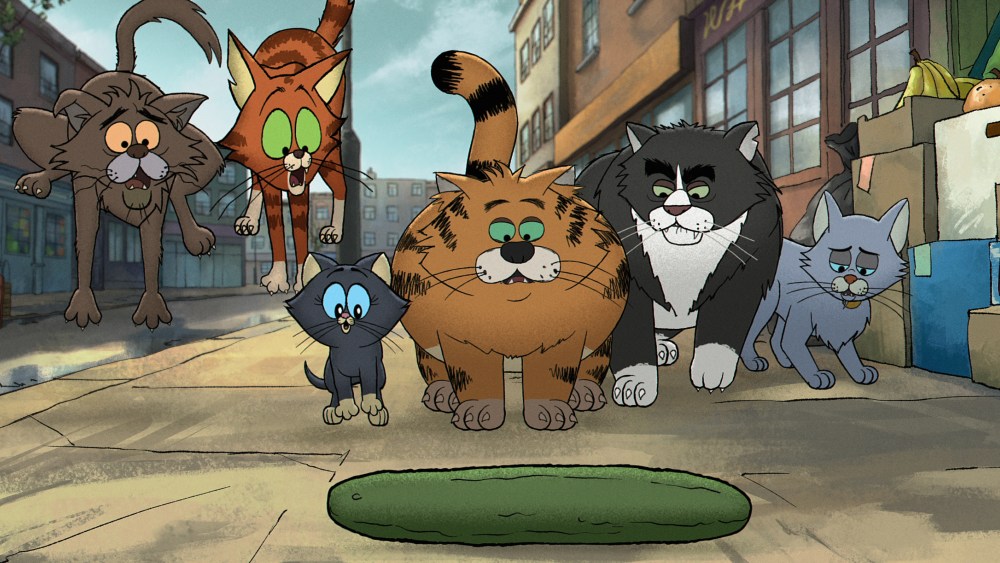
Ricky Gervais has brought his distinctive comedic voice to Netflix with “Alley Cats,” an animated series that defies expectations with its surprisingly melancholic tone. The show centers on Gus, a portly orange tabby with a working-class British accent reminiscent of Garfield, who navigates life with fellow strays Puke, Fang, and Olive in a dilapidated London rowhouse. Together, the group spends their days watching television, engaging in crude banter, and embarking on pointless adventures that frequently backfire.
What distinguishes “Alley Cats” from similar adult-oriented animated comedies is its unflinching portrayal of hardship beneath the crude humor. While the characters freely exchange vulgar language and debate absurd topics, the series doesn’t shy away from depicting the harsh realities of feral existence. Deaths occur suddenly, characters grapple with abandonment, and existential dread permeates the narrative. This darker undercurrent separates Gervais’s offering from louder, more joke-heavy competitors, creating a distinctly British sensibility that prioritizes resignation and melancholy over constant comedy.
A serialized storyline involving a lost kitten provides emotional grounding for the series, allowing genuine tenderness to emerge through Gus’s growing attachment. Rather than indulging in sentimentality, Gervais handles this relationship with restraint, delivering a conclusion that aligns perfectly with the show’s bittersweet worldview. The result is a viewing experience that blends crude humor with unexpected poignancy, offering audiences something distinctly different from mainstream animated fare.
Originally reported by Variety →
About the Author