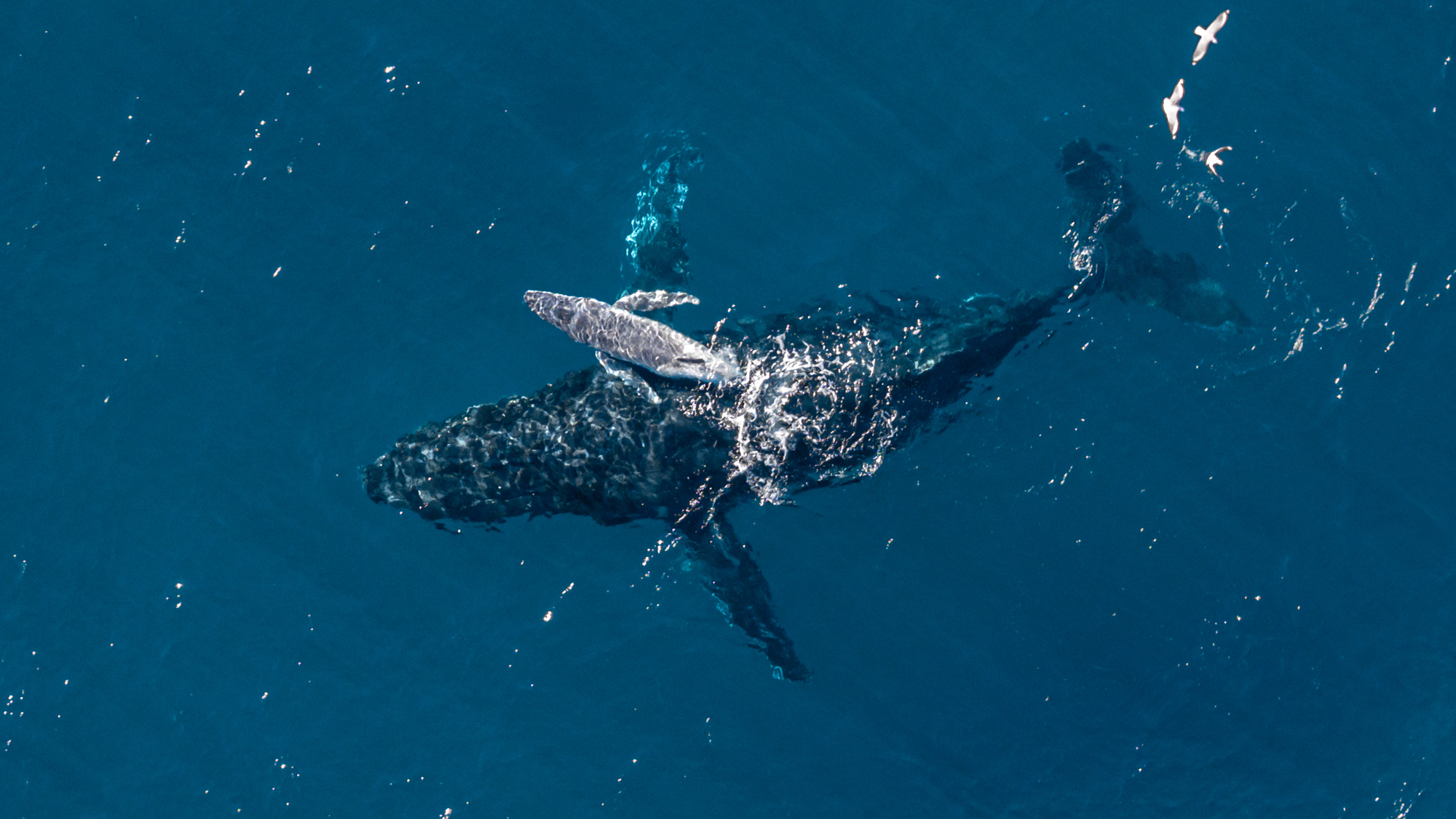
A commercial drone operator working off the coast of New South Wales has captured what researchers believe to be the first-ever aerial footage of a humpback whale giving birth in the wild. Alexander Forrest, piloting the camera drone for the Organisation for the Rescue and Research of Cetaceans in Australia, documented the remarkable event on July 28 near Kingscliff. The footage shows the mother whale trailing behind her pod before delivering her calf, which emerged into blood-tinted water before taking its first breath at the surface.
This sighting marks only the fourth recorded instance of a humpback whale birth being filmed, making it an exceptionally rare documentation of marine life reproduction. The drone footage provides scientists with unprecedented insights into the critical early moments of a newborn calf’s life and maternal behavior patterns. Researchers note that this mother whale gave birth alone, unlike some other whale species where pod members form protective circles around birthing females, offering valuable comparative data for future studies.
The newborn calf will remain with its mother for approximately eleven months, nursing on nutrient-rich milk while developing the strength needed for long-distance migration. Humpback whales undertake some of the longest migrations in the animal kingdom, traveling up to 5,000 miles between polar feeding grounds and tropical breeding areas. The successful birth exemplifies the remarkable recovery of humpback populations from near extinction to approximately 50,000 individuals along the New South Wales coast, representing one of conservation’s greatest achievements.
Originally reported by Livescience →
About the Author