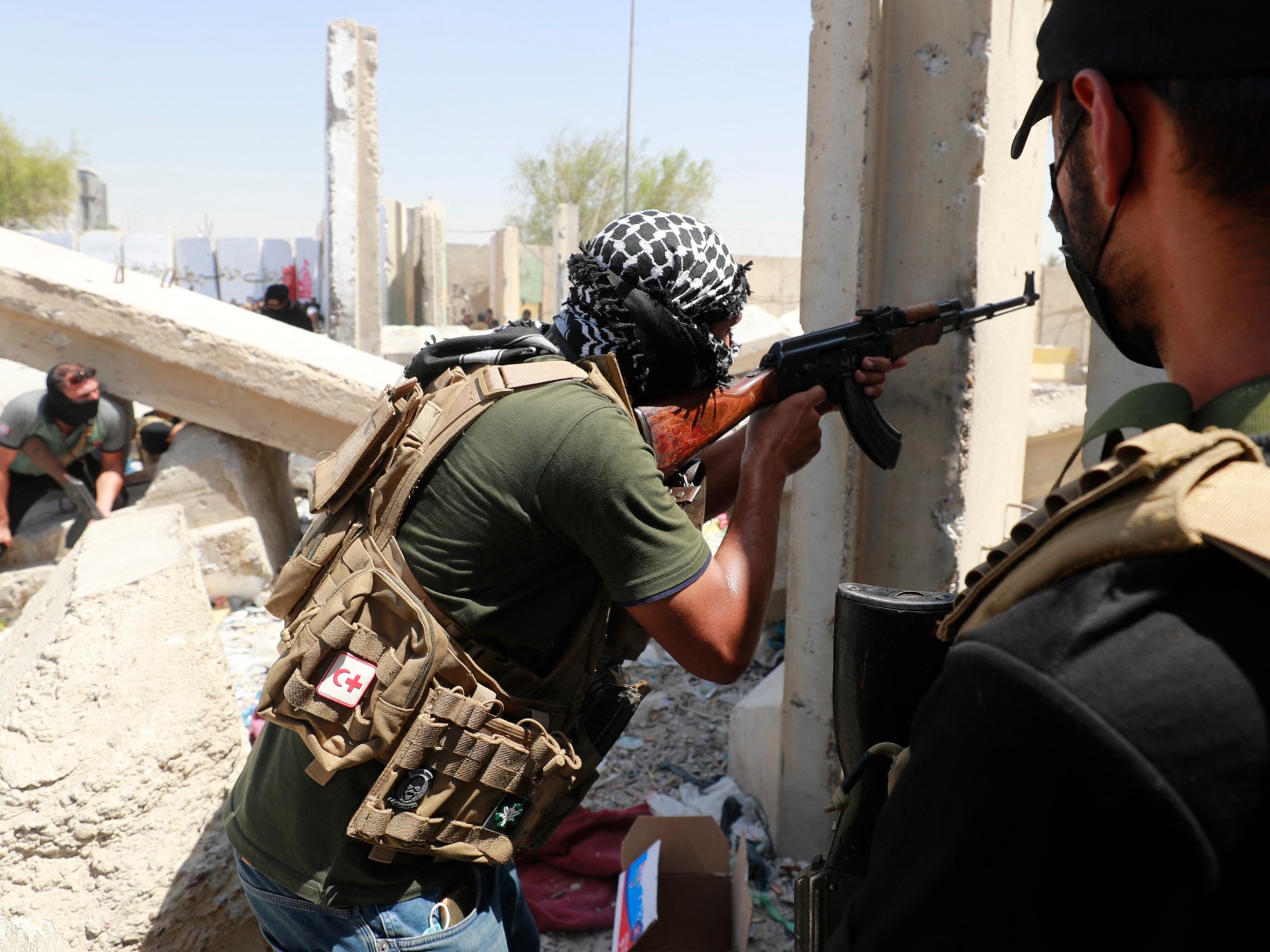
Iraq’s government is confronting a significant crisis as powerful Shia paramilitary groups resist a state disarmament initiative ahead of a September 30 deadline. Prime Minister Ali al-Zaidi has been pushing to consolidate all weapons under government control, a measure designed to strengthen state authority and address economic pressures. While some armed factions have agreed to integrate into official state forces, several influential groups have firmly rejected the mandate.
Kataib Hezbollah, an Iran-backed faction and one of Iraq’s most heavily armed organizations, has explicitly refused to surrender its weapons, citing the need to maintain what it describes as resistance capabilities. Harakat al-Nujaba has similarly resisted, arguing that disarmament efforts should focus on illegal weapons rather than those held by groups that protected Iraqi territory. Political analysts warn that the defiance of these groups raises fundamental questions about state legitimacy and sovereignty.
The disarmament push reflects both international pressure and Iraq’s severe economic difficulties, with oil revenues comprising over 90 percent of the state budget. Experts suggest the government faces limited options as the deadline approaches, with some predicting the timeline may be extended to prevent immediate confrontation. Observers emphasize that resolving the standoff is critical to Iraq’s political future and international standing.
Originally reported by Aljazeera →
About the Author