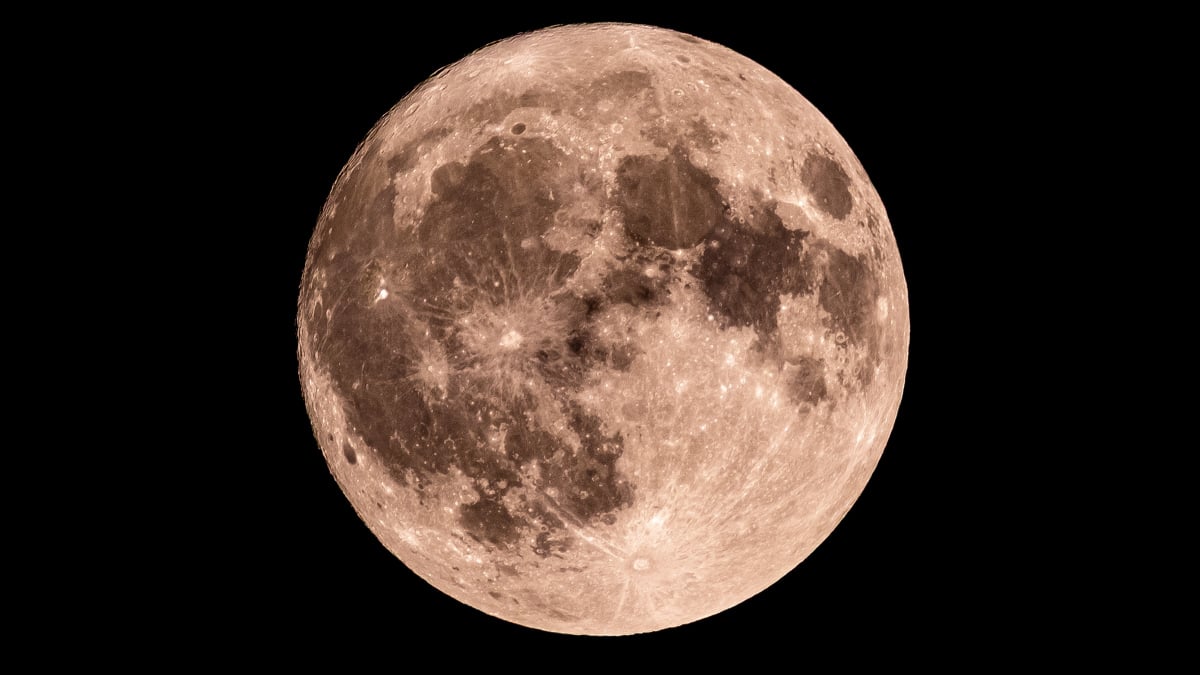
On Thursday, August 6, the Moon enters its Third Quarter phase, positioned midway between the Full Moon and New Moon stages in the lunar cycle. According to NASA’s Daily Moon Guide, approximately 48% of the Moon’s surface will be illuminated and visible from Earth during this phase.
Observers without optical equipment may still spot several notable lunar features, including Oceanus Procellarum, Copernicus Crater, and Tycho Crater. Those equipped with binoculars will have the opportunity to view additional formations such as Gassendi and Clavius Craters along with Mare Humorum. A telescope will reveal even more details, including the Schiller Crater and the Fra Mauro Highlands region.
The Moon completes a full orbital cycle around Earth every approximately 29.5 days, causing its appearance to shift continuously throughout the month. As the relative positions of the Sun, Earth, and Moon change, the amount of illuminated surface visible from our planet varies, creating the eight distinct phases that comprise the lunar calendar. Skywatchers looking ahead should mark August 28 on their calendars, when the next Full Moon will grace the night sky.
Originally reported by Mashable →
About the Author