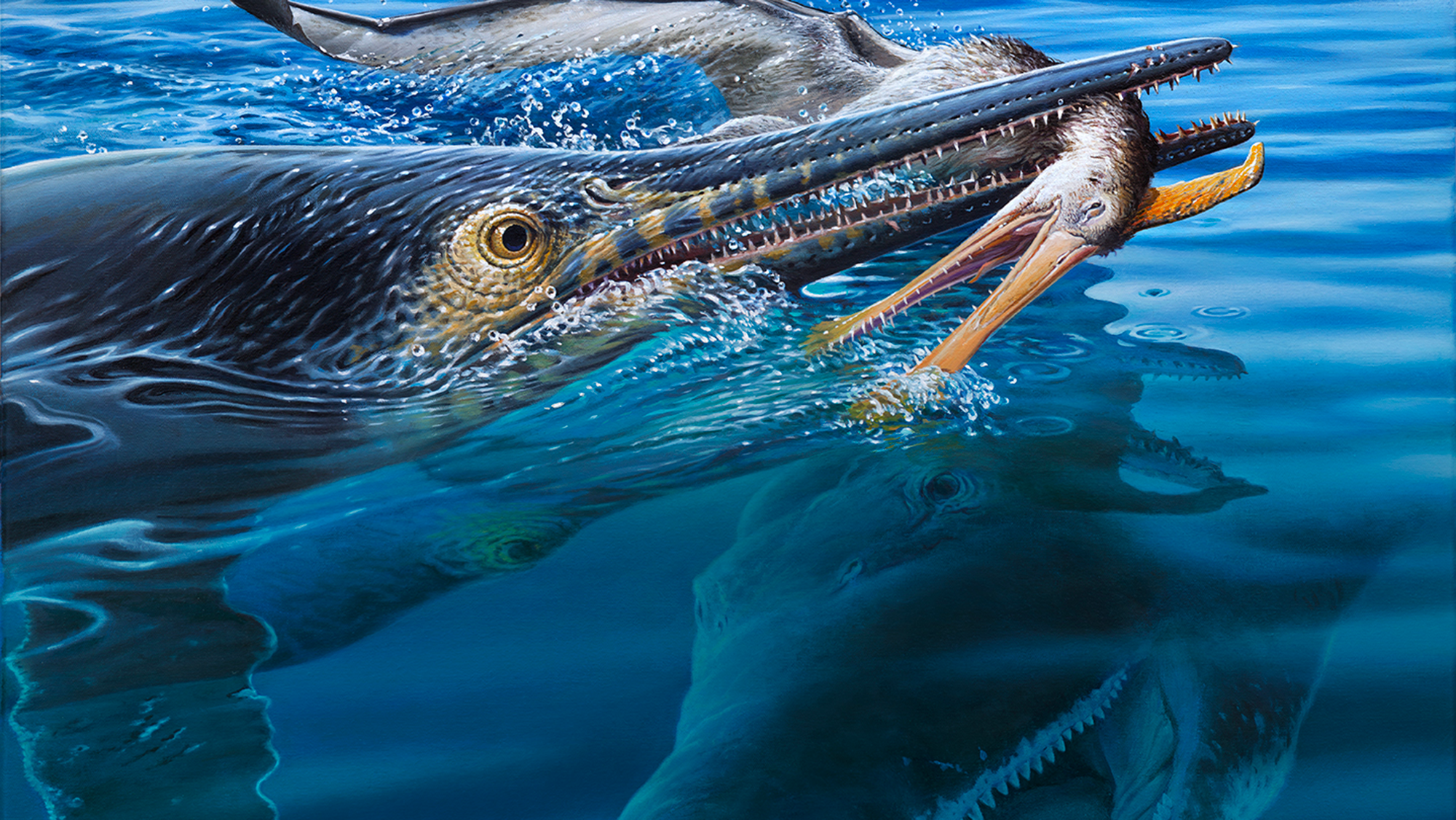
Researchers have discovered a remarkable fossil in Australia’s outback that provides unprecedented insight into ancient marine predator-prey relationships. The specimen, nicknamed “BOB” or “Bag of Bones,” is a 20- to 23-foot ichthyosaur that lived approximately 100 million years ago. Upon examination, scientists found fragments of a pterosaur’s jaw preserved within the marine reptile’s body cavity, alongside remains of fish and cephalopods, marking the first confirmed evidence that ichthyosaurs consumed flying reptiles.
The ichthyosaur met a violent end, as evidenced by severe trauma visible in its skeleton. Researchers discovered shattered bones, missing ribs, and significant crushing injuries that suggest the creature was attacked by a Kronosaurus queenslandicus, a massive apex predator that inhabited the ancient Eromanga Sea during this period. Scientists theorize the ichthyosaur may have perished shortly after consuming the pterosaur, either from the predatory attack or other natural causes, and subsequently sank to the seafloor.
Advanced neutron imaging technology allowed researchers to examine the fossil’s internal contents without damaging the delicate structures. This non-invasive scanning revealed stomach contents that would have remained hidden using traditional methods. The findings, published in Gondwana Research, illuminate the complex food web of early Cretaceous Australia and suggest that pterosaurs—whether freshly deceased or resting on the water’s surface—may have represented an occasional food source for some ichthyosaurs.
Originally reported by Livescience →
About the Author