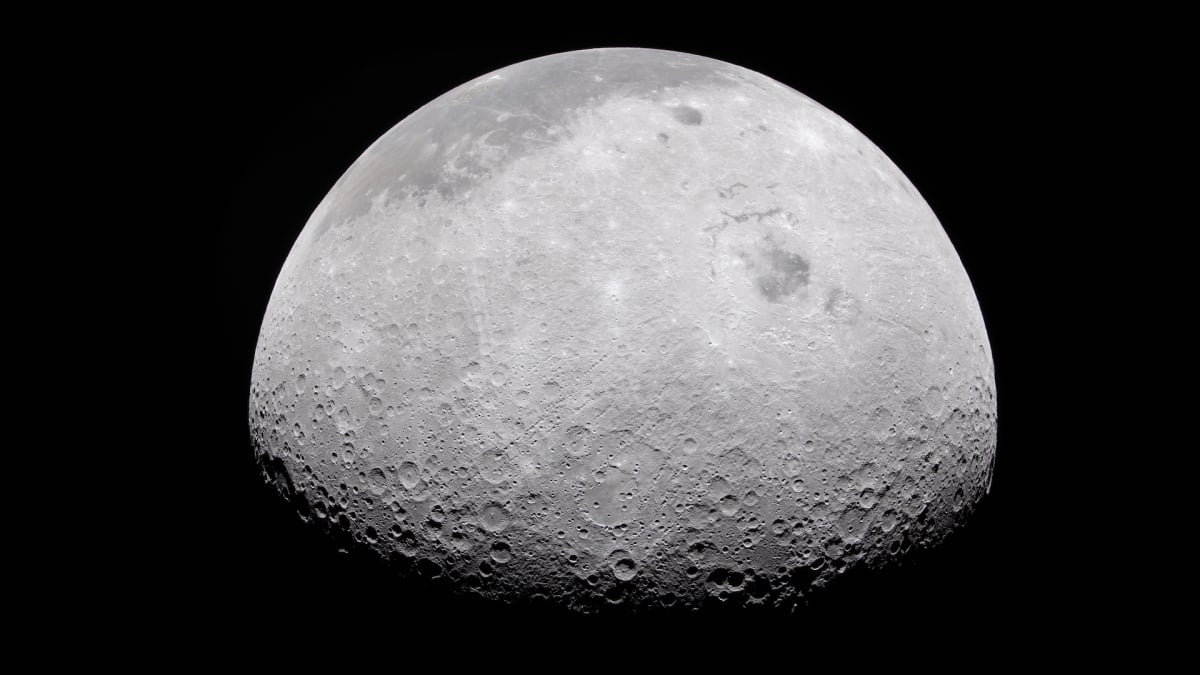
A detached upper stage from a SpaceX Falcon 9 rocket has reportedly impacted the lunar surface, NASA announced this week. The rocket component was deployed during a mission last year to transport Firefly Aerospace’s Blue Ghost 1 lander to the moon. According to reports, the collision occurred near the Einstein and Bell craters, with the approximately 4,000-kilogram debris expected to create a crater measuring roughly 60 feet in width and 12 feet in depth.
NASA attributes the unintended lunar trajectory to solar activity and gravitational forces that altered the rocket’s upper stage path through space. The space agency confirmed that the impact presents no threat to Earth and described such collisions as an accepted practice for spacecraft operating in lunar orbit. Astronomers initially flagged the object using publicly available data, with NASA’s Center for Near Earth Object Studies providing subsequent verification of the collision course.
The impact offers valuable research opportunities for scientists studying orbital mechanics and the moon’s geology. NASA’s Meteoroid Environments Office will document the event using telescopes stationed at Marshall Space Flight Center in Huntsville, Alabama, to capture imagery and data from the collision. While human-made objects rarely reach the lunar surface, the moon regularly experiences impacts from meteoroids due to its lack of atmospheric protection.
Originally reported by Mashable →
About the Author