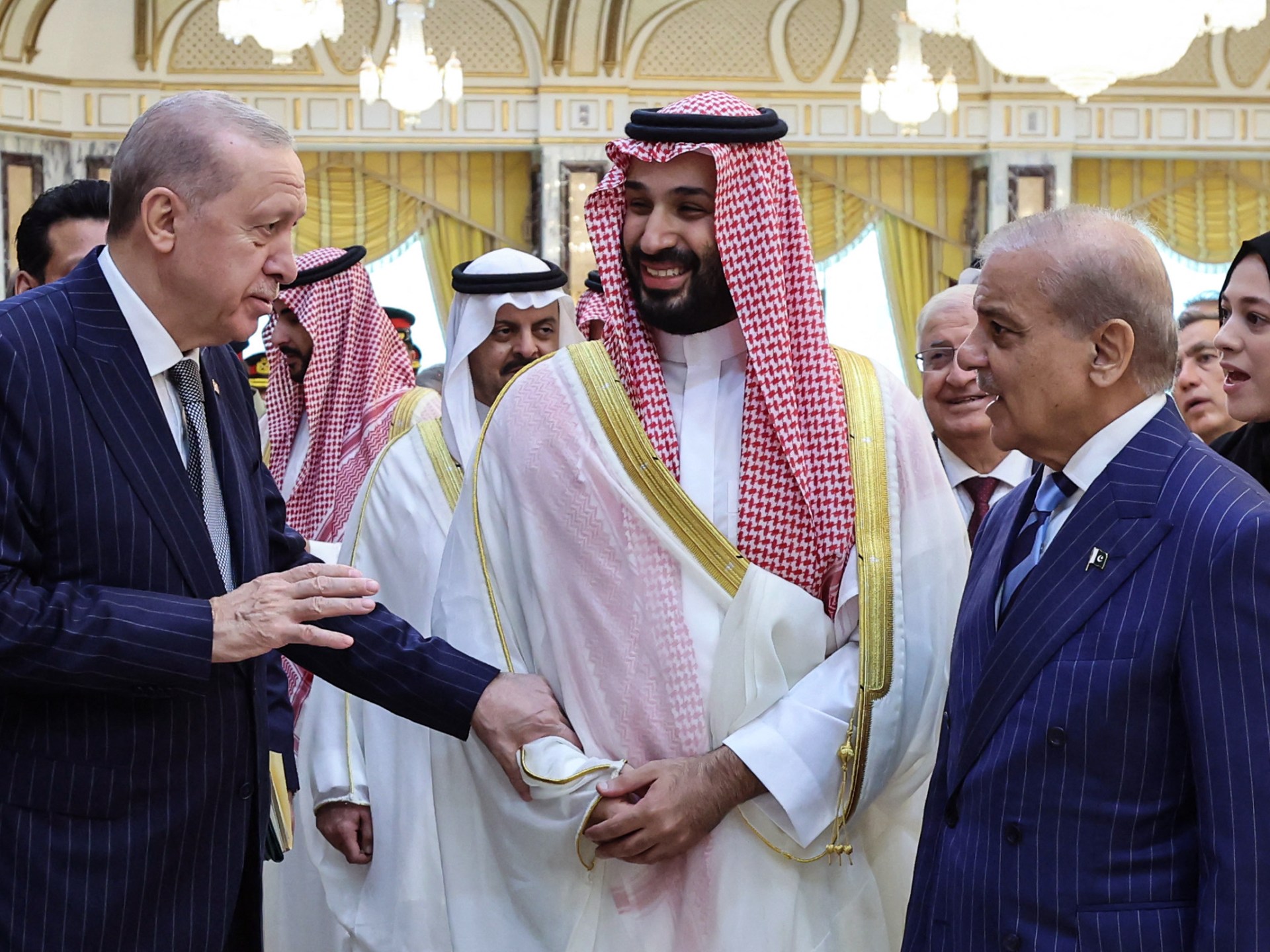
Three major Middle Eastern and South Asian powers have formalized a mutual defense agreement, marking a significant shift in regional alliances. Pakistan, Saudi Arabia, and Turkey signed the Mecca Joint Defence Pact on Friday, building on a previous defense arrangement between Riyadh and Islamabad. The trilateral partnership brings together nations positioned between Iran and Israel, raising questions about whether such an alliance can effectively reshape Middle Eastern power dynamics.
Each signatory contributes distinct military capabilities to the partnership. Pakistan brings combat-experienced armed forces and nuclear weapons—the only atomic arsenal in a Muslim-majority nation. Turkey, a NATO member, offers advanced drone technology and defense manufacturing expertise. Saudi Arabia supplies crucial financial resources. However, experts remain uncertain about the pact’s practical enforcement mechanisms, particularly regarding whether an attack on one member would obligate the others to intervene in all scenarios.
The alliance reflects broader geopolitical recalibration across the region. Recent conflicts involving Iran, Israel, and various regional actors have prompted traditionally rival nations to set aside differences and pursue strategic cooperation. Turkey and Saudi Arabia, previously divided over the 2018 killing of journalist Jamal Khashoggi, have reconciled through pragmatic diplomacy. Growing concerns about American reliability under shifting U.S. administrations have further incentivized these nations to develop independent security arrangements.
The pact’s effectiveness remains untested, particularly regarding potential conflicts in which members already face distinct challenges—from Pakistan’s border tensions to Saudi attacks by Iran-aligned groups and Turkey’s ongoing security concerns.
Originally reported by Aljazeera →
About the Author