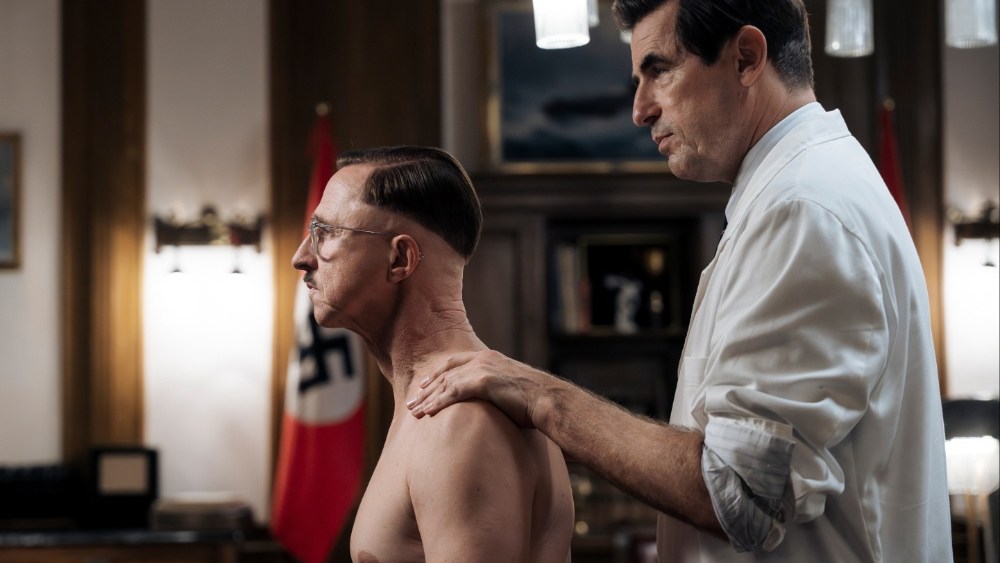
German filmmaker Felix Randau’s latest psychological thriller examines the murky legacy of Felix Kersten, a massage therapist who served Heinrich Himmler during World War II. The period drama, which premiered at the Locarno Film Festival, follows Kersten as he attempts to capitalize on his claimed wartime heroism by pursuing a Nobel Peace Prize nomination. Danish actor Claes Bang delivers a commanding performance as the self-aggrandizing Kersten, whose version of history becomes increasingly difficult to verify.
The narrative unfolds aboard a train traveling from Stockholm to Oslo in autumn 1952, where Kersten hopes to learn of his Nobel Prize selection. A determined journalist named Hedda Wohmann, portrayed by Austrian actress Valerie Pachner, intercepts him to investigate his claims of saving thousands of concentration camp prisoners. Their tense exchanges reveal conflicting accounts of the same historical events, forcing both characters and viewers to confront uncomfortable questions about truth and memory.
Through intimate cinematography and carefully constructed scenes, Randau explores how individuals construct their own narratives. Supporting characters, including both Kersten and Wohmann’s spouses, provide additional perspectives that complicate the film’s central moral questions. Flashbacks to Kersten’s wartime interactions with Himmler suggest his self-importance, while contemporary parallels about the malleability of historical truth give the story urgent relevance.
Originally reported by Variety →
About the Author