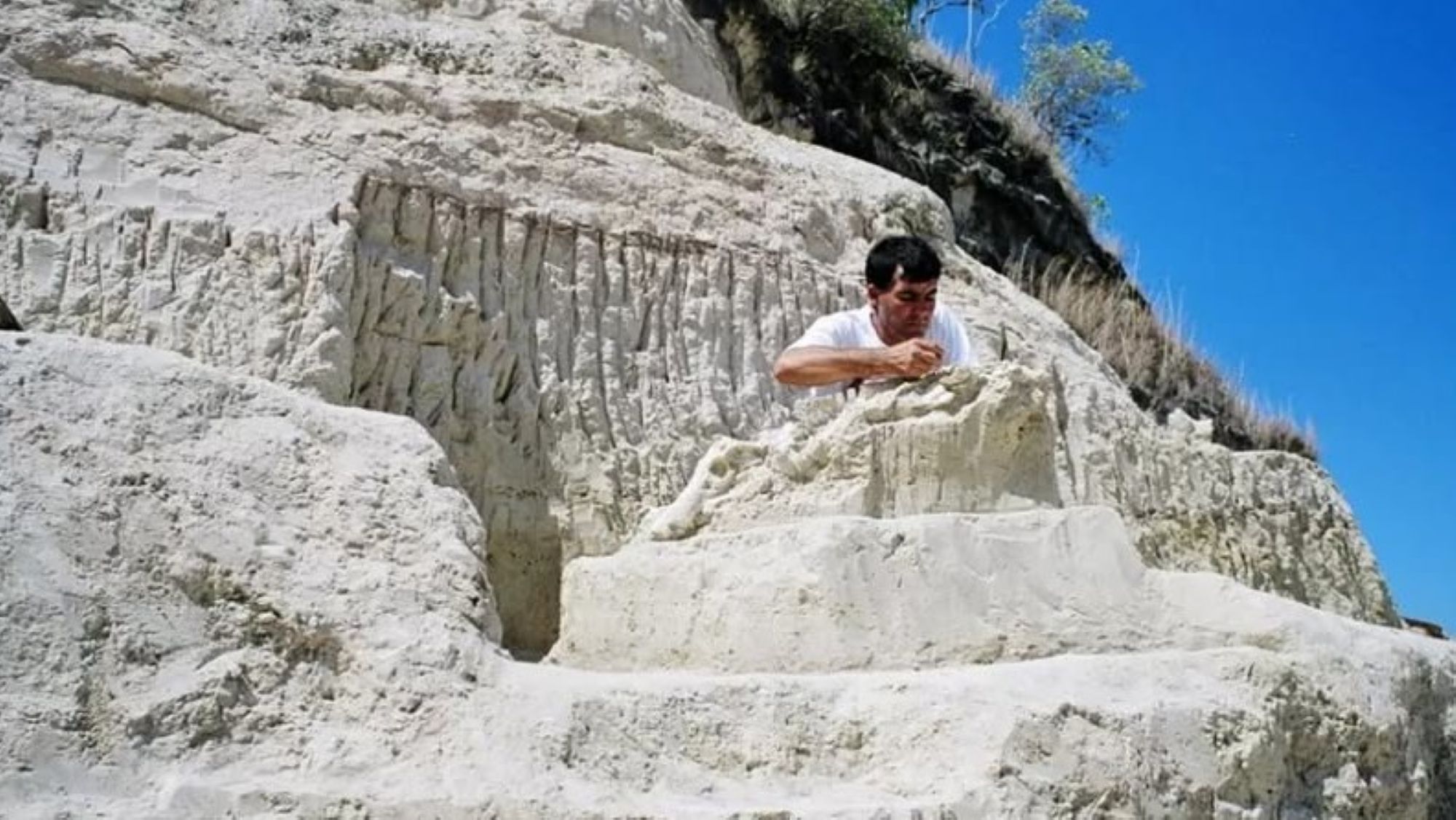
Located in Minas Gerais within Brazil’s Cerrado savanna, Uberaba Geopark represents a remarkable window into Earth’s distant past. The site, officially recognized by UNESCO in 2024, preserves geological formations and fossil remains spanning the Late Cretaceous period, roughly between 100.5 million and 66 million years ago. Known locally as “Terra dos Gigantes,” or “Land of the Giants,” this geopark stands as one of the world’s most significant repositories of ancient life.
The park has yielded over 10,000 fossils representing an extraordinary array of prehistoric organisms. Paleontologists have uncovered remains of dinosaurs, ancient crocodilians, turtles and other extinct creatures that once inhabited the region. Among the most impressive finds is the skeleton of Uberabatitan ribeiroi, a titanosaur stretching 27 meters in length and 10 meters in height. These discoveries cluster within distinct geological formations, including the Serra da Galga and Serra Geral mountain range, structures created from ancient volcanic eruptions preceding the breakup of the supercontinent Gondwana millions of years earlier.
The exceptional fossil preservation at Uberaba resulted from unique environmental conditions. During the dinosaur era, the landscape alternated between shallow water systems and river channels, allowing animal remains to become encased in protective layers of sediment. Beyond its paleontological significance, the geopark overlies the Guarani aquifer, one of Earth’s largest freshwater reserves supplying drinking water to over 100 cities across Brazil, Argentina, Paraguay and Uruguay.
Visitors can explore multiple museums and scenic trails throughout the park, including paths leading to Vale Encantado, featuring forests, waterfalls and ancient rock formations. The region’s ecological importance extends beyond geology, as the Cerrado biome itself harbors thousands of plant species and diverse wildlife while storing substantial carbon reserves.
Originally reported by Livescience →
About the Author