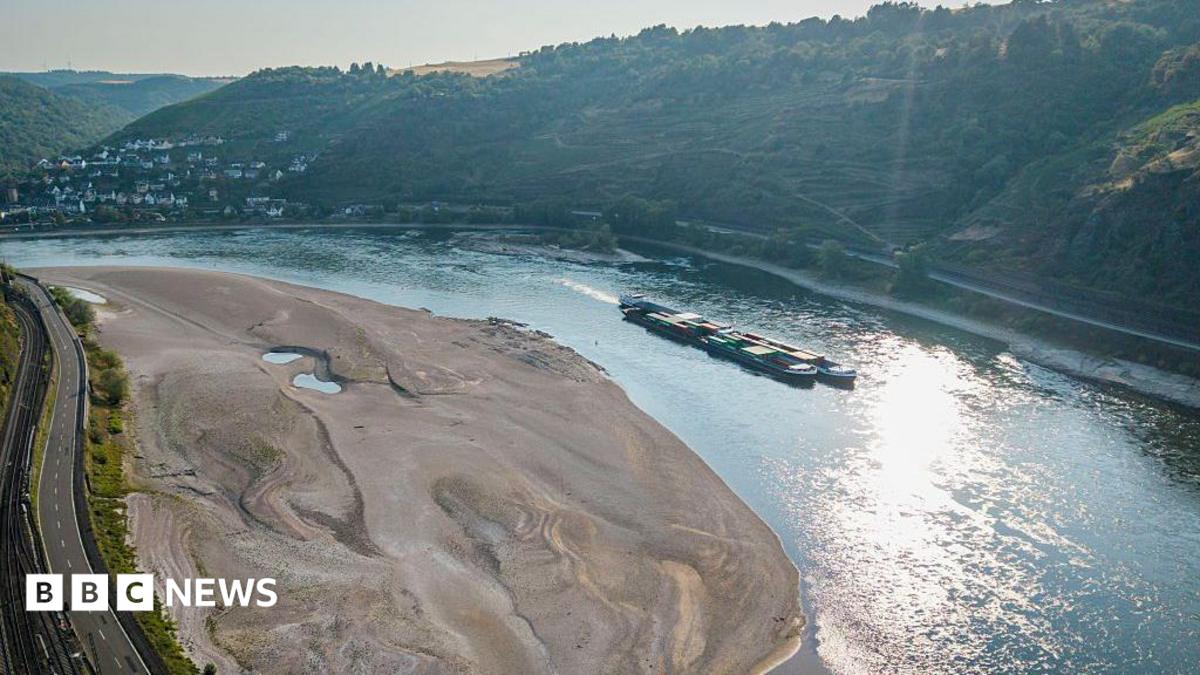
Europe’s major river systems are experiencing unprecedented drought conditions, with the Rhine, Danube, and Po rivers all reaching record low water levels. The Rhine has fallen to its lowest point since record-keeping began in several German and Dutch locations, including the critical measurement station at Kaub, which plays a vital role in determining shipping capacity. Similar alarming developments have affected the Danube across ten countries and Italy’s Po river, with authorities reporting that nearly half of Rhine monitoring stations and over three-quarters of Danube stations recorded extremely low water levels by late July.
The sustained dry conditions are creating significant economic challenges across the continent. Reduced water depths on the Rhine are forcing shipping companies to reduce cargo loads and distribute freight across additional vessels, threatening to increase transport costs and create supply chain disruptions. The situation has grown so critical that a nuclear power plant in Hungary is operating at diminished capacity, while energy production facilities in Serbia and Romania have implemented emergency measures including controlled explosions to redirect water flow and temporary automotive manufacturing halts.
The drought crisis extends beyond transportation and energy concerns. Saltwater intrusion from the sea into the Po river mouth has damaged ecosystems and disrupted agricultural irrigation for farmers. Experts attribute the intensifying drought conditions to human-caused climate change, which increases evaporation through elevated temperatures despite no clear long-term trend toward reduced rainfall across much of Europe. The combination of higher demand for water and ongoing heatwave conditions threatens freshwater availability and raises concerns about potential wildfire activity.
About the Author